Rumors · 1906–1917 · Centre
TRAM OR HORSE TRAM?
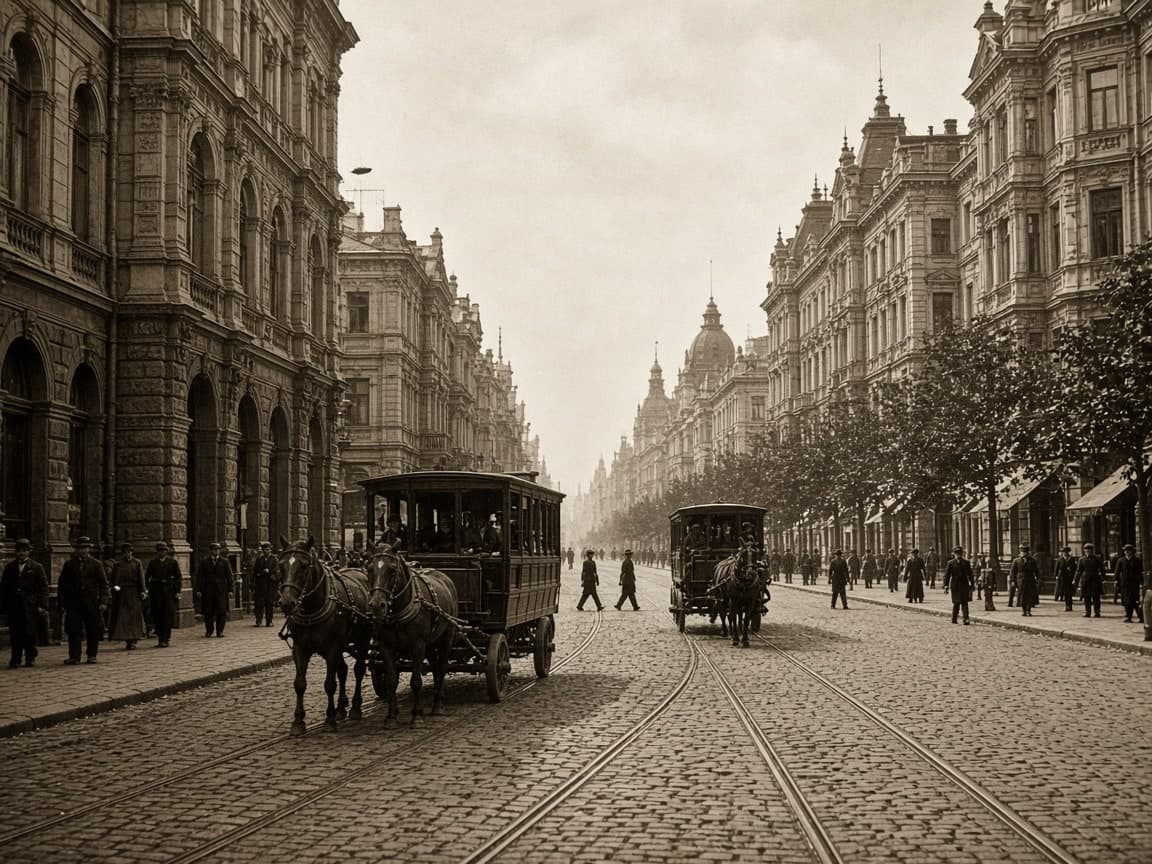
Beginning of the twentieth century. Rails have been laid along Pushkinskaya, Sumskaya and other leading highways of the city. However, trams ring along some of them, and carriages crawl along others, driven by natural horsepower. The contract between the city government and the owners did not allow the complete replacement of horses with electric traction.
horsecars - French and then Belgian companies. Foreigners managed to conclude it in their favor for several decades, and with the allocation of central streets for horse trams. Moreover, the contract provided for the exclusive right of these companies to transport railway communications in the city center in general, which supposedly included electric ones.
The Belgian joint-stock company tried with all its might to get a concession for the construction of the tram. At the same time, it used all methods of pressure, carrot and stick tactics, influencing both the capital and localauthorities. However, this was stubbornly opposed by the mayor A. Pogorelko, the council and part of the Duma members. While negotiations continued, the city began laying tram tracks on its own. The first line ran along Petinskaya Street (now Plekhanovskaya), connecting the city’s largest enterprise, the Kharkov Locomotive Plant, with the center. It was opened in 1906.
Since the central highways were occupied by horse trams, the tram tracks were laid around (for example, the horse tram went along Sumskaya, while the tram was laid along Pushkinskaya). It is clear that electric traction caused a clear preference among the townspeople over the archaic horse. Realizing that the city could manage without them, the Belgians still continued to desperately resist, trying to retain at least the center. This continued until the outbreak of the First World War, when both sides no longer had time for it. The horse tram remained in the city until 1917.
Places in this story
This site is for all Kharkiv locals. Based on “Kharkiv in Tales and Anecdotes” (Folio, 2001).