Place-names · Kharkiv
THE HOUSE WEeps FOR THE SOLDIER
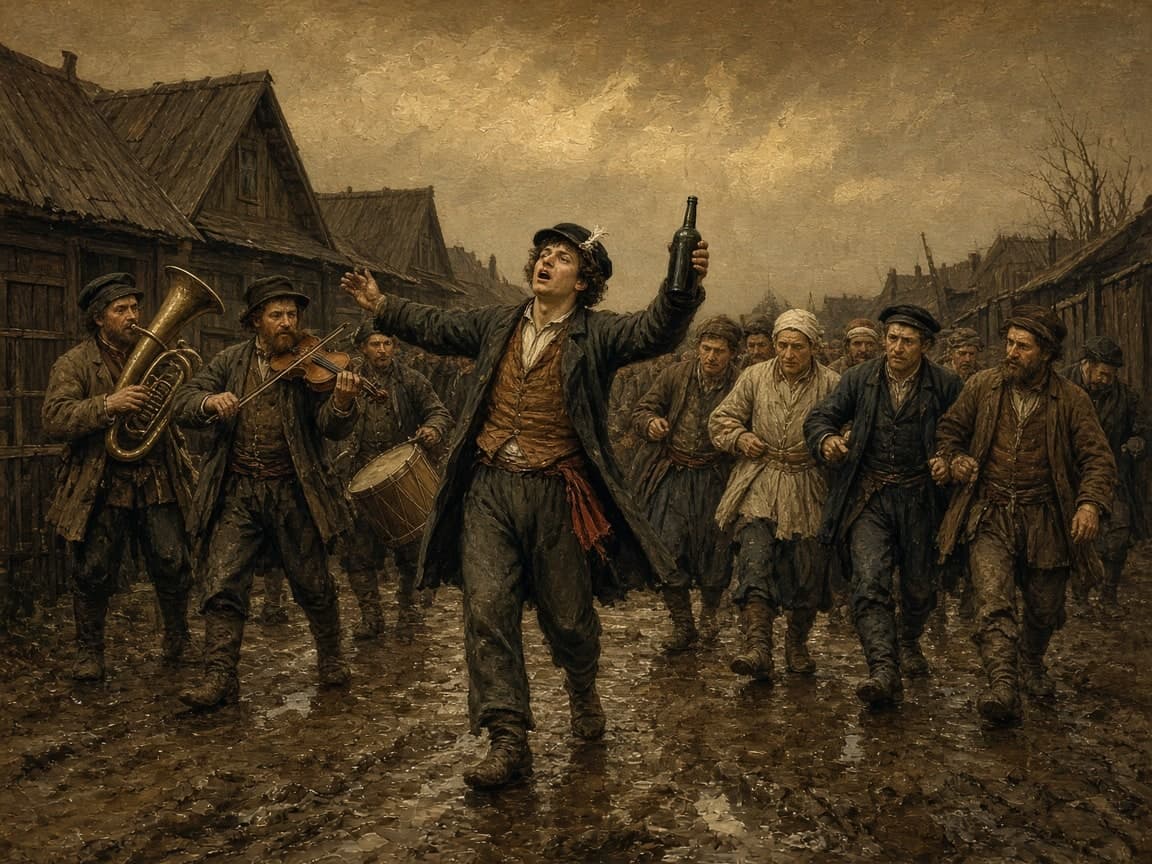
It was often possible to see such a picture. Accompanied by street musicians, a procession moved through the city or village. In front is a fairly drunk guy, behind him is a group of men and women of different ages, dancing the “crane”, but with joyless faces. It was a farewell to the army.
The soldier's war lasted for twenty-five years, and endless wars continued in the Caucasus, so the family often said goodbye to their son and grandson forever. It was allowed, however, to hire someone else instead of one of his own, whose age and turn had come to become a soldier. This was done for money, which is why such conscripts were called “hiremen.” It is clear that, first of all, rich parents took advantage of this, who hired children from poor families in return for their own. But often people who had nothing to lose or who had disgraced themselves became hired workers. Society itself wanted to get rid of them: drunkards, thieves, horse thieves, brawlersand other persons of vicious behavior.
A few weeks before recruiting, the tragicomedy began. In addition to the agreed upon amount, the hireling negotiated for himself the right to carouse and indulge in excess at the expense of his employers and, moreover, allowed himself whatever he pleased. Together with his employers, who were obliged to pay for his antics, he wandered half-drunk through the streets, went into taverns and demanded wine, snacks and all sorts of delicacies there, then suddenly sat down in the middle of the square to play cards, involving passers-by, then scattered their goods from merchants, or forced the employers to dance. And so every day, until the draft!
The strength and patience of the employers were completely exhausted, and they could not wait for the deadline. At the same time, they had to not only accompany, but also guard the hireling day and night, since he could disappear on the last day and then all the torment and expenses would go to waste.
This site is for all Kharkiv locals. Based on “Kharkiv in Tales and Anecdotes” (Folio, 2001).