Place-names · Kharkiv
BY STAGECOACH
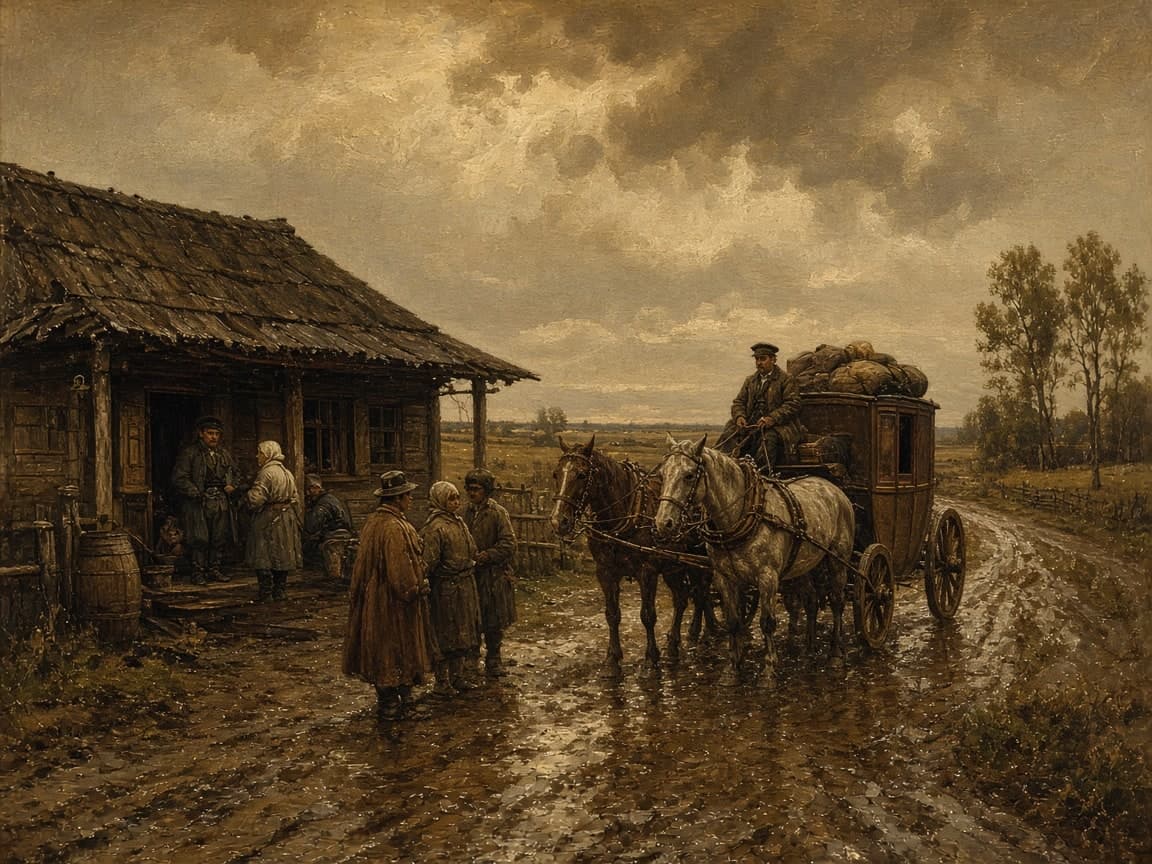
Kharkov residents who sent a letter to another city had to wait for months for a response. Firstly, mail left Kharkov only twice a week: on Wednesdays - to the Moscow highway, on Sundays - to all other directions. Secondly, the most exhausted horses were used to deliver it.
The fact is that postal duties were assigned to the hussar regiments, but the hussars were proud people and considered it shameful for themselves to perform the duties of postmasters. They refused to provide good horses for postal carriage and generally ignored this duty in every possible way. Therefore, the townspeople themselves had to provide both their people and traction for this purpose.
The townsfolk also found this duty a burden, and they, feeling sorry for the horses, often offered oxen for transportation. This order, or rather disorder, eventually tired of the governor, and he ordered the postal carriage to be contracted out. By agreementthe contractor was required to maintain at first thirty, and at the end of the eighteenth century, sixty horses. It must be said that this service was also used to send treasury, carry out various special courier orders, and send sick and convict prisoners.
The contractors took money from the city treasury for their work regularly, but they worked somehow, and the draft power
there was always not enough. The cost of postage reached a very large amount for those times - forty kopecks, but when the St. Petersburg authorities intervened, it was reduced to... six or even three kopecks.
The Kharkov postal station was located on Vozne-Seneka Square (now Feuerbach), where a house was later built for it, which is still in use today. The coachmen and the stables were taken out of there, having allocated a place for them nearby - right behind the Kharkov Bridge (the famous 1st gymnasium was later built there - now this room is occupied byEngineering and Pedagogical College).
This site is for all Kharkiv locals. Based on “Kharkiv in Tales and Anecdotes” (Folio, 2001).