Tales · 1924–1941 · Centre
PEOPLE AND BEASTS
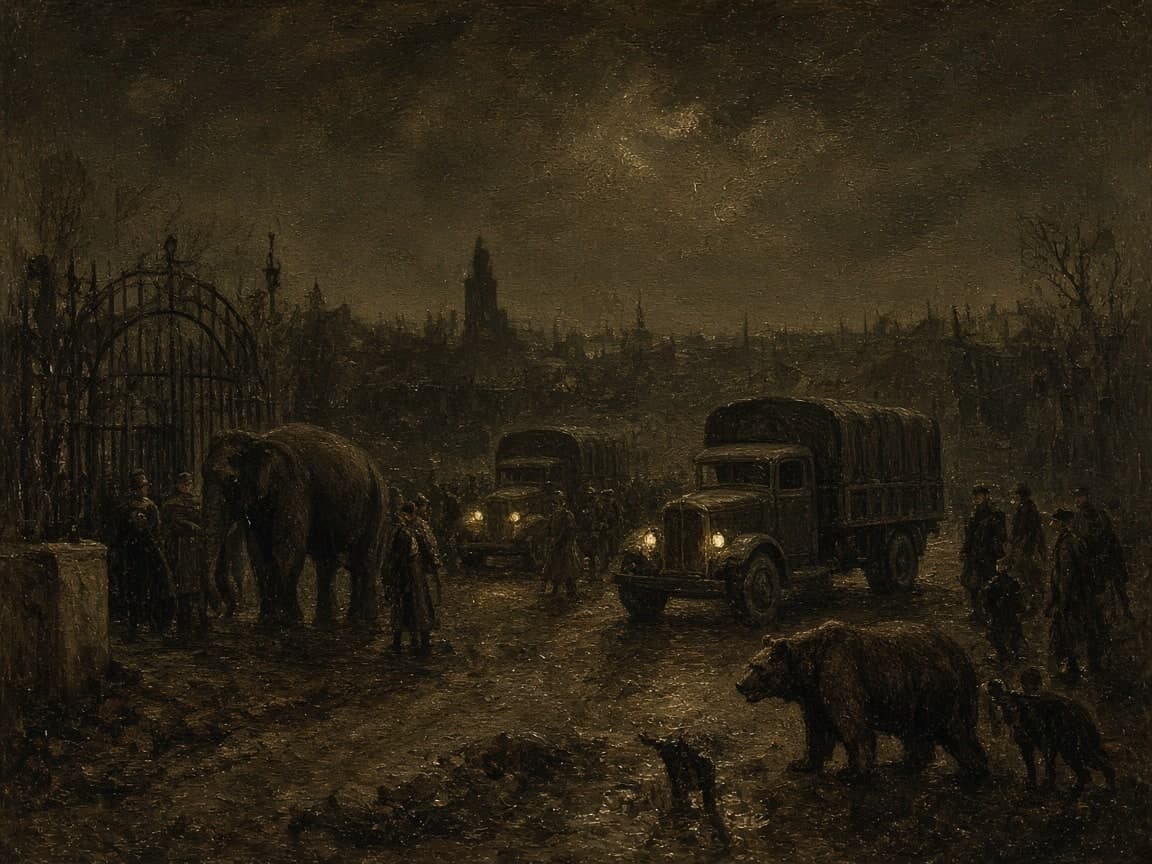
October 1941. At night, under the cover of darkness, several trucks with their headlights off drove into the territory of the Kharkov Zoo. A group of fighters emerged from them. In a secluded place, closer to the territory of the botanical garden, they dug deep holes, covered the bottom with a tarpaulin and placed the bags they had brought with them there, after which they covered them with earth. A few days later the Germans entered the city.
The bags did not contain weapons or explosives for the underground, but grain and potatoes. They were intended for the remaining animals. This was done at the request of the director of the zoo, N.P. Ewald, who had led it since 1924. The supply of food helped the inhabitants survive the first difficult winter of the occupation, but the premises were not heated and the most heat-loving animals died out.
The zoo in Kharkov, or, as it was then called, the “public menagerie”, was organized at the end of the nineteenth century - the third in Russiaafter Moscow and St. Petersburg. The university allocated a place for it on its territory. At first, the living collection consisted of representatives of the fauna that lived in the territory of our province and neighboring ones. A batch of steppe ungulates and birds was presented by the creator of the Askania Nova reserve, Baron E. Falz-Fein.
The entrance to the zoo was through the city garden from Sumskaya - next to the monument to Karazin (now there is a monument to T. Shevchenko in this place). Here there were two round pointed turrets, on which there was a shield with the inscription “YUROA. Poultry house, beekeeper, vivarium, aquarium, beekeeping station, museum" (YUROA - South Russian Society of Acclimatization).
In addition to exotic ones, our zoo preserves representatives of the fauna that were once found in abundance in our region, and are now listed in the local Red Book. These are aurochs, bison, saigas, wild tarpan horse, and among large predators - lynx and brown bear (last timea bear in the wild was seen in the Kharkov region at the beginning of the 19th century). Birds include the eagle owl, steppe eagle, and white-tailed eagle. Moreover, to the delight of employees and visitors, they not only live, but also reproduce. And yet, over the past decade, the number of inhabitants here has decreased by one quarter. Concerned about preserving the planet's fauna, the international zoo community is ready to provide rare animals for free, but there is no money for their delivery, and customs barriers are also a hindrance.
People in this story
Places in this story
This site is for all Kharkiv locals. Based on “Kharkiv in Tales and Anecdotes” (Folio, 2001).