Tales · Kharkiv
TWO HALVES
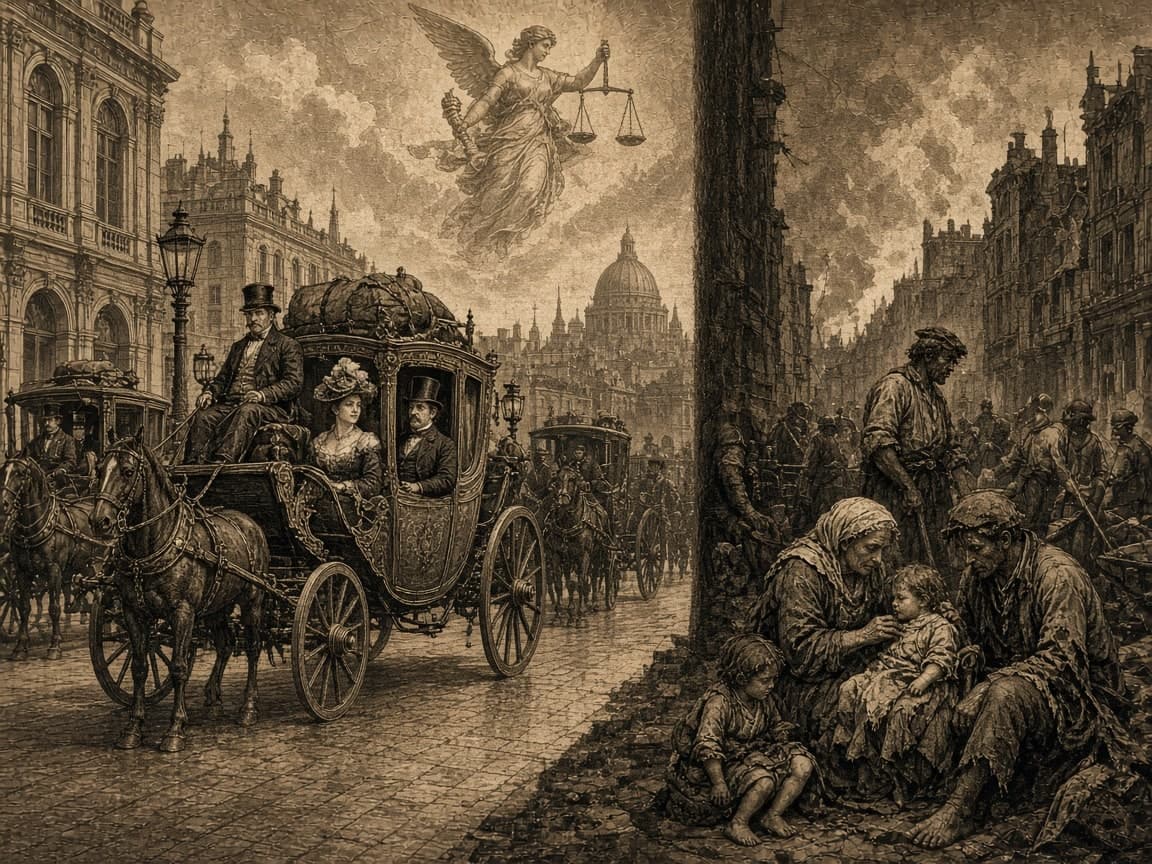
The inhabitants of the city were divided into two parts, sharply different from one another. The first group included people gifted either with the nobility of the family, or with the privileges of the class, or with wealth. They were a minority, although this minority reigned over the other part, which made up the majority of the city's population.
Life in Kharkov was difficult for this second part of the population. Having the most meager rights to the blessings of life, and some even less so - townspeople, guilds, state peasants and, finally, quit-rent and serfs taken for ransom by merchants were always on guard, since the privileged class - nobles, officials, merchants - could mock them with impunity, exploit their labor and even subject them to beatings and corporal punishment.
Such arbitrariness was no exception in the lives of these numerous humiliated and insulted ordinary people. In order to live peacefully and not suffer from the tyranny of the powerful, it was necessarysubservience to them, humiliate yourself, lie, connive, drown out your human “I” and not protest against violence. Whether a landowner, a rich merchant or an official orders a roofer to make a bucket, a locksmith to fix a lock, a shoemaker to sew boots, or a contractor to build a house, barn or fence - payment for such work always depended on the arbitrariness of the customer, who often paid nothing for small jobs and paid paltry sums for large ones, with abuse and insults.
No less difficult was the life of people who served the rich and privileged inhabitants. I'm talking about clerks, about fellows and boys, about workers and generally about cheap servants. All these workers were in such heavy dependence on their masters that they differed little from the landowner's serfs. These people did not •• receive their salaries carefully, but each time they begged for favors or handouts.
- What is your salary?- the owner sternly asked the clerk or worker who asked him.
- Yes, master, I should sew a pair for myself.
— Should I sew a pair? That's how it is! Do you want to show off? Well this | It can still wait. Get behind the counter and do your thing!
Often, wanting to collect a hefty sum, the clerk did not receive his full salary for five or more years, but when the calculation was made, he was short of two or three hundred rubles on his account. And all this happened without pro-Zygest and noise.
Every courtyard of a wealthy man in the street, whether he was a merchant or a nobleman, was locked at ten o'clock in the evening, and the key
from the gate was given into the hands of the owner of the house. This led to the fact that the clerks could not leave their master’s house anywhere and had to spend the long evenings of autumn and winter within the walls of the master’s house. Sitting in the clerk's room in the evenings, they had no right not only to sing, but even to play the guitar or the piano alone.harmony, thereby breaking the deathly silence of the master's yard. The owner would deprive a clerk who would take it into his head to make music, as an unreliable person and a bad trader. As for the worker or boy, a guitar, balalaika or
harmony.
On days when there was a ball or evening in the owner’s house, and therefore the gates were open for guests, these people could leave their confinement for the city to look for entertainment. But it was not allowed to go to a fellow clerk - the owners strictly monitored this in order to prevent the possibility of transferring their trade secrets” (V. Karpov).
This site is for all Kharkiv locals. Based on “Kharkiv in Tales and Anecdotes” (Folio, 2001).