Rumors · 1957 · Centre
HONORED — UP THE FLUE
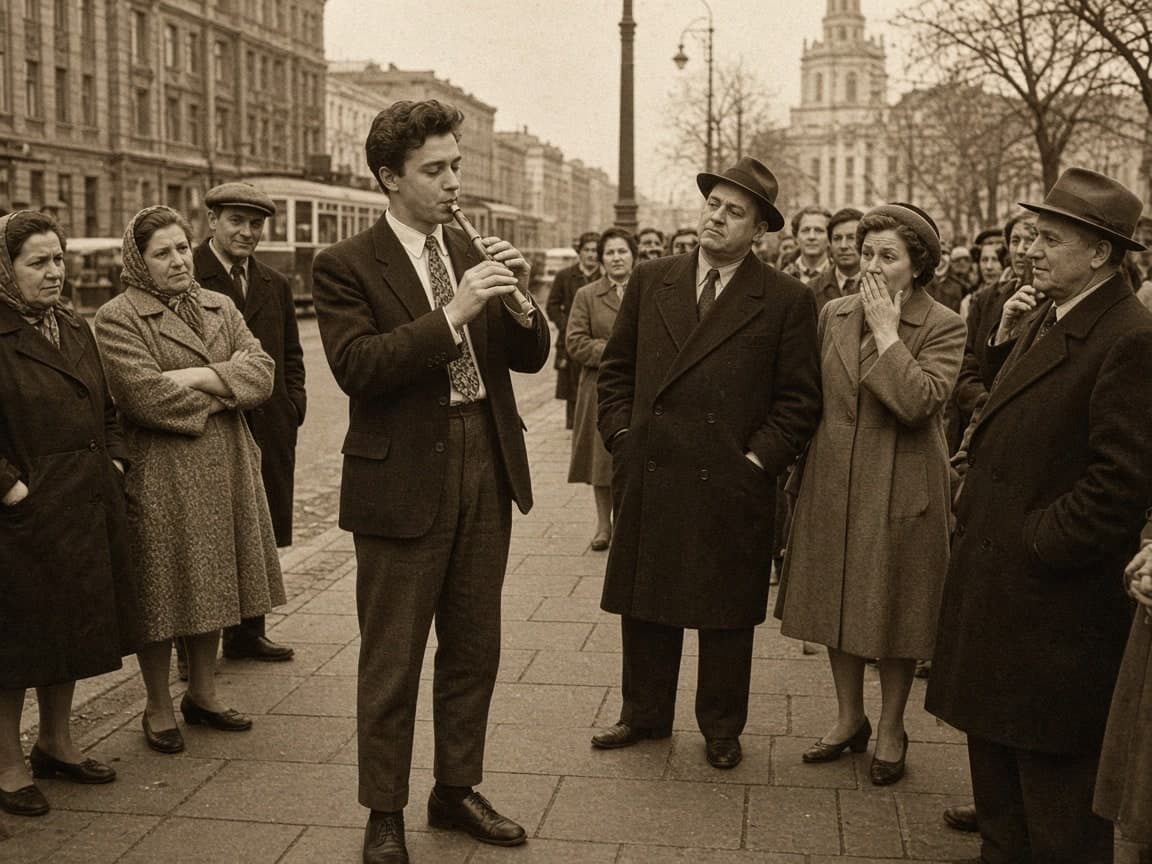
In 1957, the sensational feuilleton “Hipsters” appeared in the Pravda newspaper, which in a satirical form reflected a characteristic phenomenon of its time. Thus, for the first time, a new word was recorded in print, which had already become widespread in oral speech. “Hipsters” were young people who did not want to live according to the order established from above: wearing baggy clothes, having a boxing haircut, honoring only the Peredvizhniki artists, and pleasing their ears only with folk songs and the music of Soviet composers.
In line with the usual ideological guidelines, the main printed organ of the Central Committee of the Party branded this phenomenon as servility to the West. Like any publication in Pravda, this feuilleton was perceived as a signal to action. But it was no longer the time to drive fashionistas into camps for re-education, and therefore the Komsomol was aimed at eradicating them. Instead of fighting hooligans, Komsomol memberspatrols walked around the city and caught boys and girls in bright clothes and fashionable hairstyles. They were taken to strongholds, where the main weapon was scissors: they immediately cut off the hair on their heads and cut their trousers.
The favorite place for hipsters to hang out in Kharkov was the “100-meter street” - the section of Sumskaya from its beginning to the corner coffee shop opposite the new opera house. The stronghold of the brigade militia (members of the police assistance brigade - the predecessors of the people's vigilantes) was located in the very center of this area in the premises of the radio technical school.
One day in late autumn, a patrol stopped a student on Sumskaya wearing a then unusual bright orange jacket with a hood. They accused him that her color did not correspond to the moral code of the young builder of communism. The owner of the jacket showed a branded patch on the collar with the designation of a Moscow garment factory, but this did not help - the brigade members claimed that hesewed it myself. And then the detainee recognized the group leader as a student from the same polytechnic, only a senior year student.
“Look, you’ll come back to take my father’s exam!” - he told him.
- Who is he? — the leader became wary.
— Head of the department of KhPI.
- What's your last name?
The leader was taken aback and thought about it. And then his assistants brought another prey into the room - a short, rustic guy in pipe trousers. Grabbing the scissors, the brigade soldiers switched to the man.
- Do you even know who was detained? - said the younger E., nodding at the new guy.
- Whom?
- This is Bykov!
- What kind of Bykov is there? - the brigademilians waved it off, starting their operation.
- Artist!
In addition to his notable roles in the theater. Shevchenko, Leonid Bykov at that time had already starred in the films “Maxim Perepelitsa” and “Marina’s Fate” and was very popular throughout the country.
Finally, the chief vigilante finally realized that on the wrongattacked, and, to his chagrin, was forced to put the detainees outside. To celebrate, the student and the artist immediately went to a popular basement on Sumskaya, where they celebrated this adventure.
Places in this story
This site is for all Kharkiv locals. Based on “Kharkiv in Tales and Anecdotes” (Folio, 2001).