Tales · 1936 · Centre
IN "THE TWELVE CHAIRS"
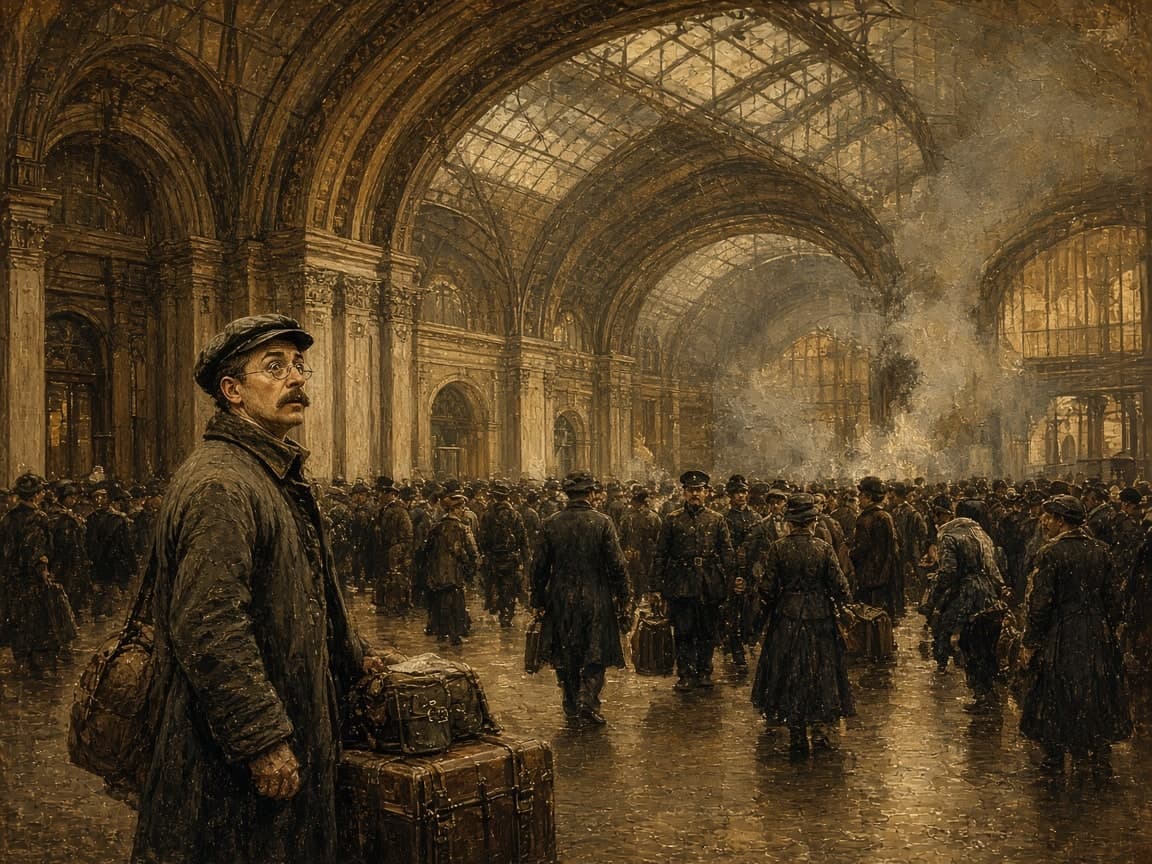
“The city is noisy - the center of the Ukrainian Republic. After the province, it seems like I’ve arrived abroad,” wrote a certain traveler in a cassock to his wife Katerina Alexandrovna in the provincial town of N. while at the Kharkov station. This was Father Fedor, who went in search of Madame Petukhova’s treasures.
The capital impressed the priest so much that he compared with it subsequent cities where his search passion took him.
“I don’t like the city of Rostov. In terms of population and its geographical location, it is significantly inferior to Kharkov.”
“In terms of its geographical location and population, the city of Baku is significantly larger than the city of Rostov. However, it is inferior to the city of Kharkov in terms of its movement.”
There is hardly any need to remind that the classic “road rally on the roads and sloppiness”, which was joined by the “wildebeest” with its colorful crew under the leadership of Ostap Bender,passed along the route Moscow - Kharkov - Moscow.
By the mid-30s, the satirical novels “The Twelve Chairs” and “The Golden Calf” were translated into dozens of languages around the world (even Hindi, Chinese and Macedonian), except... Ukrainian. I. Ilf and E. Petrov decided that the most popular humorist writer in Ukraine, Ostap Vishnya, could do this best. For this purpose, in 1936 they came from Moscow to Kharkov. And then they learned that he had been convicted and was in prison. Then the authors turned to his brother Vasily Chechvyansky, also a famous master of the cheerful pen.
The meeting took place in the writer’s apartment in a building on the street. Sumskaya, 122 (the same one where Ostap Cherry previously lived). Alas, this work was not destined to come true: a few months later V. Chechvyansky was arrested and shot as an “enemy of the people.”
Places in this story
This site is for all Kharkiv locals. Based on “Kharkiv in Tales and Anecdotes” (Folio, 2001).