Tales · 1901–1985 · Centre
SIMON KUZNETS
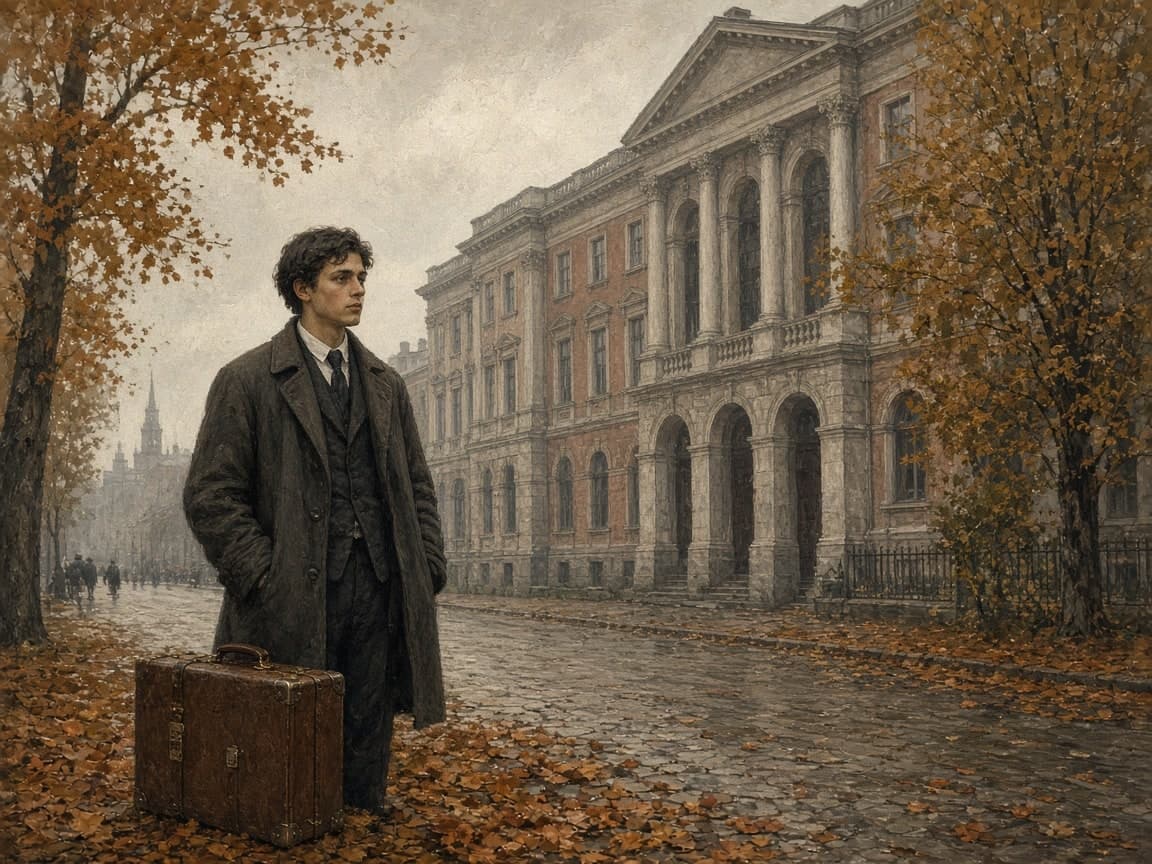
Semyon was born in Kharkov in 1901 into the family of a fur trader. Apparently, Kuznets Sr.’s business affairs were not going well, and he decided to try his luck in America. Settle there and then call your relatives. The boy was six years old at the time. However, more than one year passed before the father got back on his feet overseas, then world war and revolution broke out, so the family was able to reunite only fifteen years later. Its head had already acquired the surname Smith, which, as you know, in English means “blacksmith.” The son kept his last name the same, although he transformed his name into Simon.
After graduating from high school in Kharkov, the young man wished to study further and, after studying English for several months, entered Columbia University. He completed the entire course there and passed in just two years! Soon he defended his doctoral dissertation and received an invitation to work at the National Bureau of Economicresearch.
S. Kuznets was considered a major specialist in the field of economic statistics. His developments became one of the foundations on which a way out of the most acute economic crisis of the late 20s and early 30s was found for the United States. The scientist has carried out major research in the theory of economic cycles, the so-called “Kuznets’ law” relating to the development of the economies of developing countries, as well as a number of other fundamental works that have become classics.
In 1971, Simon Kuznets (fourth in his field of expertise) was awarded the Nobel Prize. The scientist died in 1985 in Cambridge (USA), where until his last days he was a professor at Harvard University. In our city, nothing still reminds us of our famous fellow countryman. And even in the list of “Kharkovites of the Century” his name is not there.
People in this story
This site is for all Kharkiv locals. Based on “Kharkiv in Tales and Anecdotes” (Folio, 2001).