Place-names · 1918–1933 · Centre
SUICIDE IN GOSPROM
Having once again found himself in prison, Nikolai began to think about how to escape from it. I looked at my camera and came up with an idea! As soon as it began to get light, he climbed into the chimney and, resting his hands, feet and back on the walls, began to climb up. Soot fell down the collar, into the bosom, into the mouth, ears. When we managed to reach almost the very top, a layer of soot slid down under our foot, and with it the fugitive himself. I listened. There was silence. The walls of the prison were so thick that no sound penetrated through them. Having caught his breath, Nikolai climbed again. Again - elbows, back, feet... This time successfully - he climbed to the edge of the pipe, grabbed it and, pulling himself up, climbed onto the roof. The crows took off cawing.
In the morning, security discovered the escape. The head of the prison reported to the police department that the prisoner had disappeared only with the help of evil spirits: the cell was on the top floor, the locks were sealed at night, and allremained intact - no traces anywhere.
So the then young revolutionary Skrypnik escaped from the Kholodnogorsk prison. Subsequently, he fell into the hands of the police more than once again; he was exiled to Arkhangelsk and Eastern Siberia: Turukhansk, Yakutsk, but he managed to escape from there too. After October, Nikolai Alexandrovich became one of the closest employees of the Chairman of the Cheka F. Dzerzhinsky, heading a special department for the fight against counter-revolution and sabotage. In 1918, he was appointed People's Commissar of Internal Affairs, and then the Prosecutor of Ukraine. However, he developed the most, taking the post of People's Commissar of Education in 1927.
N.A. Skrypnik began to pursue an official course towards Ukrainization, which completely coincided with his personal views. Government institutions, scientific and educational institutions, the press, and book publishing switched to the Ukrainian language. At his insistence, compulsory study of M. Grushevsky’s “History of Ukraine-Rus” was introduced in party schools. Howeverin the early 30s, it became clear to him that this course was only a maneuver by Moscow, which, in order to strengthen its power, was trying to attract nationally-minded citizens of the republic in this way. Following instructions from Moscow, the process began to wind down. Nikolai Alexandrovich could not agree with this and act contrary to what he considered right, and immediately came under attack.
At the plenum of the Kharkov Regional Committee, his secretary Postyshev stated: “The enemy is trying to hide behind Comrade Skrypnyk’s back both in his literary works on the national question and cultural construction, and in his practical work in managing the educational system in Ukraine... Now Comrade Skrypnyk himself rubs his back with a hard washcloth, but does not press very hard. We’ll have to help him a little” (laughter and applause in the audience). In 1933, Nikolai Alexandrovich left ideological work and headed the State Planning Committee of the Ukrainian SSR, having moved frombuildings on the street Artem (where the rectorate of the pedagogical institute is now)
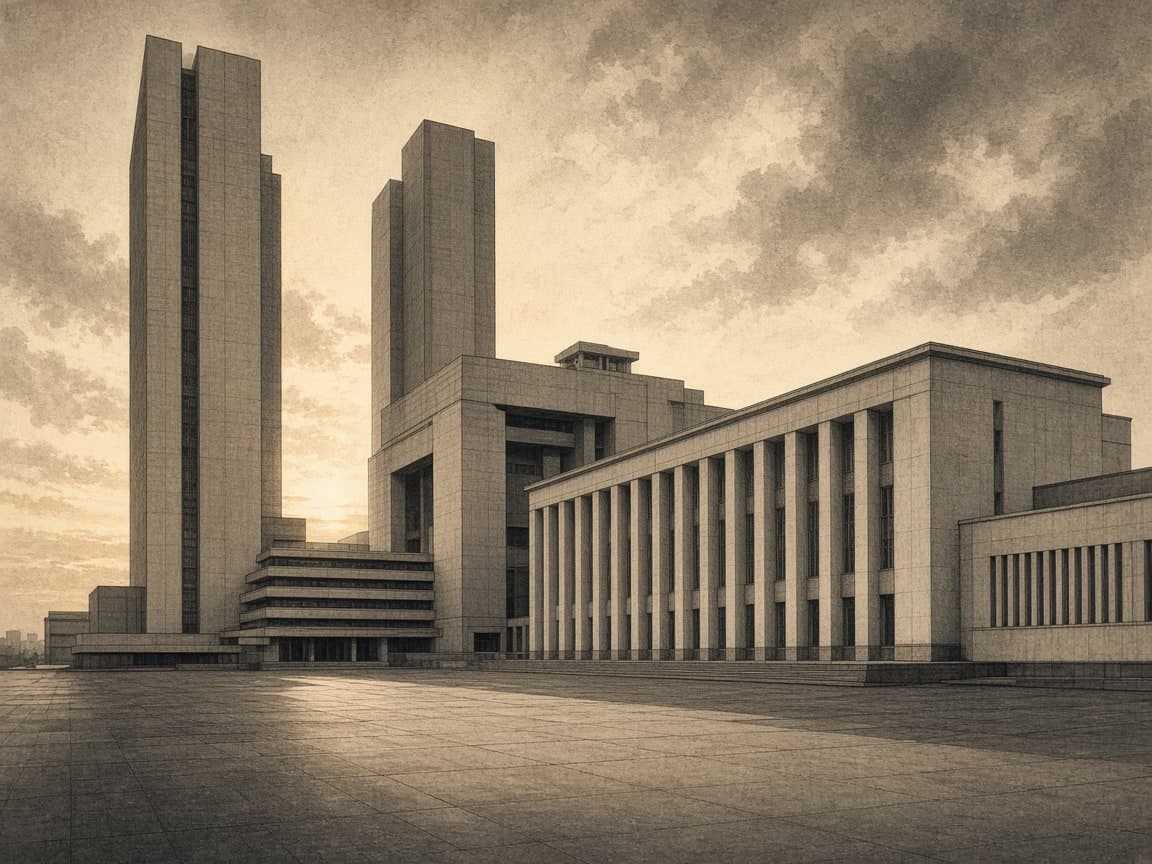
in Gosprom. Famine began in the villages, which he, of course, was well aware of and which “set him up” as an economic leader, although all the seizures of grain from the peasants passed him by. However, despite his high position, he was unable to do anything. According to one version, after dialing Stalin’s phone in the Kremlin via a direct line, Skrypnik told him what he was thinking about all this and shot himself. He was still alive when the Secretary of the Central Committee P. Postyshev, the main conductor of Stalin’s policies in Ukraine, came to see him. “Get out of here, you bastard! - Nikolai Alexandrovich told him. - It was you who led to this! You're a disgusting sadist!
The next day the Communist Party (Bolsheviks) U issued a statement:
“On July 7, 1933, a member of the Central Committee and the Politburo of the Central Committee of the CP(b)U, comrade. Skrypnik Nikolai Alexandrovich.
Being an old revolutionary and Bolshevik, having great services to the revolution andworking class, comrade Skrypnik committed an act of cowardice, unworthy of any communist, much less a member of the Central Committee. The reason for this unacceptable act is that in recent years Comrade. Skrypnyk, entangled in his connections with Ukrainian bourgeois-nationalist elements who had a party card in his pocket, and not having the strength to get out of this web, became a victim of these counter-revolutionary elements and committed suicide.”
The People's Commissar was buried with all honors in an elite cemetery near the hippodrome (before the war it, along with all the graves, was demolished); his name was given to the former Serdyukovsky Lane.
Places in this story
This site is for all Kharkiv locals. Based on “Kharkiv in Tales and Anecdotes” (Folio, 2001).