Place-names · 1872–1991 · Centre
GIVE ME A WHITE MONKEY!
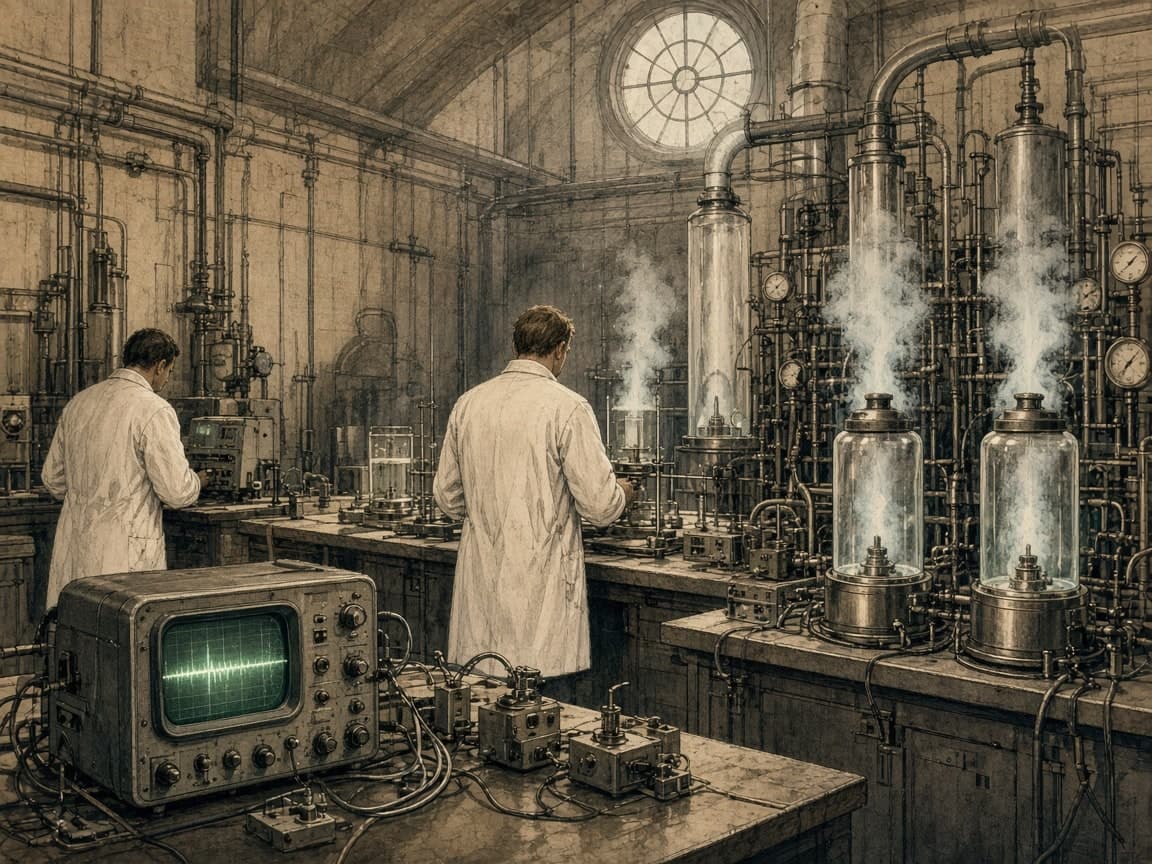
Academician B.I. Verkin admonished his students and colleagues with these words. This meant that they had to discover something completely unusual, something that had not previously existed. Obviously, they often succeeded in this, because dozens of them became doctors of science, academicians, laureates of State Prizes of the USSR, Ukraine and many others. The Physicotechnical Institute of Low Temperatures, organized by Boris Ieremievich in 1960, served as a nursery, where such new scientific and technical directions as cryogenic electronics, cryogenic biology and medicine, and space materials science were born.
But B. Verkin might not have become a physicist. “In my youth, I hesitated: who should I be? Physicist or musician? - the academician recalled. — At first I studied at both the university and the conservatory. However, physics won. But! But I didn’t stop loving music, I don’t stop, and I’ll probably never stop loving music. PhysicsFor me, it is impossible without music, and music is impossible without physics.”
The symphony orchestra plays Wagner and Beethoven, and the audience listens. However, this is not the hall of the Philharmonic, but of the FTINT. Its director regularly organized such concerts there. A keen connoisseur of music, painting and literature, he sought to introduce them to his students and colleagues. He often sat down at the piano himself. B.I. Verkin’s favorite composers were Beethoven and Wagner, he was always ready to listen to them. The hall of the FTINT Philharmonic was not empty - apparently, music helped scientists “give birth to a white monkey.”
PYRAMID OF KHATOBS
A tour bus was moving through the city center. Having left for Sumskaya, I passed a building resembling a sarcophagus in the scaffolding.
“And this is the new building of our opera house,” the guide said. “It’s been under construction for twenty years now, but the end is not yet in sight.
The next day she was summoned to high authorities and reprimanded:
- Where is your patriotism?Instead of presenting our city to visitors in a positive light, you are tarnishing it. If you repeat this again, blame yourself!
And here is a new flight. The bus took the usual route to Sumskaya again. The guide turned in the other direction, hoping to pass the ill-fated structure unnoticed. No such luck!
- Please, what is this? - poked a curious tourist.
- Where? — the guide turned around and clasped her hands in amazement: “Wow!” Just yesterday there was nothing in this place!..
One hundred and fifty years after the first professional opera performance in Kharkov, opera finally found a permanent home. Its initial residence was in 1872 the theater, located on the former Trade Square (now named after R. Luxemburg). Soon a building was specially built for him at the corner of Ekaterinoslavskaya (Poltava Shlyakh) and Lopanskaya embankment. However, after a few years it fell into disrepair and was demolished.For some time the team wandered until they settled in the premises of the Commercial Club on Rymarska Street, for which it was thoroughly rebuilt, and the interior was decorated with stucco like one of the halls of the Tuileries Palace in Paris.
There were projects for buildings for a large musical theater. One of them, A. Beketova, arose before the revolution - it was supposed to be built on Poltavsky Shlyakh street. At the end of the 20s, an international competition was announced for the architectural design of the Theater of Mass Actions with 4,000 seats, which was to become the most important hall in the capital of Soviet Ukraine. Such foreign celebrities as Walter Gropius and even the ideologist of constructivism Le Corbusier took part in the competition. First place went to the project of the famous Soviet architects the Vesnin brothers, which was to be implemented on the site of the current Mirror Stream. Construction began with the demolition of the building that stood on this site.Miron-Sitsa Church. However, in June 1934 the capital was moved to Kyiv. Kharkov, which became a regional center, could not afford such construction.
In 1937, the opera house moved to the new building of the Krasno-Zavodsky Theater on Moskovsky Prospekt (now the KhEMZ House of Culture). It was destroyed during the war, and the theater returned to Rymarskaya, and in 1991 it occupied new premises on Sumskaya. Due to its external appearance and the complexity of the interior, where it is easy to get lost, this building was popularly called the “Pyramid of KHATOBs”.
Places in this story
This site is for all Kharkiv locals. Based on “Kharkiv in Tales and Anecdotes” (Folio, 2001).