Place-names · 1924 · Kharkiv
REPRRESSED POSTHUMOUSLY
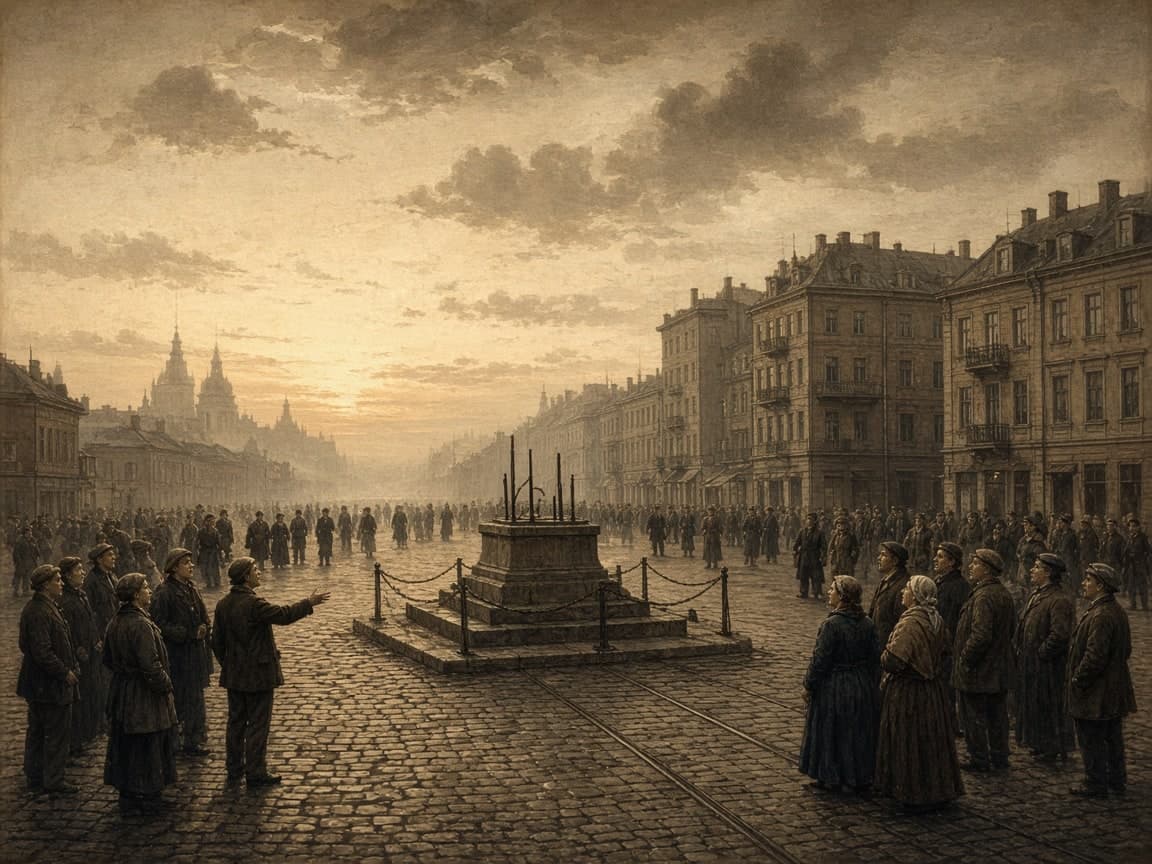
Passing one morning a small square where the streets of Girshman, Chernyshevsky and Artem meet, Kharkov residents were surprised: the monument standing in the middle of it had disappeared. The official version said: at night it was accidentally hit by a car, and therefore, so as not to interfere with traffic, it was immediately demolished. The monument was a modest bust of Blakytny and was erected on the first anniversary of his death. The place was not chosen by chance - just opposite the house where he lived. Blakitny’s grave also disappeared, along with the entire cemetery located behind the hippodrome, where prominent figures of the Soviet government were buried. The cemetery was demolished, but the graves were not moved, since most of the deceased fell into the category of “enemies of the people” after their death. The House named after Blakitny, a literary club that went down in history on Kaplunovskaya Street (now Krasnoznamenaya), also ceased to exist. His works were no longer published, and his name was completely removed fromappeals.
In the early 20s, the name Blakitny sounded throughout Ukraine: he was one of the leading figures of the Bolshevik Party, the organizer of the press, the literary process and cultural life in the country in general. He was the head of the VDU (Derzhavne Vidavnitstvo of Ukraine), the first editor of the central newspaper “Vut1”, the founder of the magazines “Vsesvgg”, “Chervoniy Perets”, one of the founders of the organization of proletarian writers “GART”. Blakytny was a famous poet and published his works under various pseudonyms.
Before the repressions that unfolded in Ukraine in the early 30s,
The poet did not live long and died in 1924.
This site is for all Kharkiv locals. Based on “Kharkiv in Tales and Anecdotes” (Folio, 2001).