Rumors · 1773–1932 · Centre
"RAKLO," "VANKO," "ZHUZHKA," AND MORE
The speech of Kharkov residents is characterized by specific, characteristic words only for them, which are not used in other areas.
Let us recall the almost disappeared from our vocabulary, but such a colorful term as “raklo”. It means at the same time a thief, a robber, a tramp-hooligan. In other words, the same “syavka”, but of a higher rank. The origin of this word is curious.
In 1773, the Kharkov Collegium, on the descent to the Lopan River, built a building for its theological seminary - a bursa, which is why the descent was named Bursatsky (despite the renaming, this name has been preserved to this day). The educational institution was named after St. Heraclius. The students were famous for their learning, but led a miserable existence: they were hungry, did not have decent clothing, and ink in the classrooms froze in winter. Several dozen people slept in one room: senior students - on benches along the walls, juniors - on the floor. Their life is authenticdescribed by N. Pomyalovsky in the famous “Essays on the Bursa”.
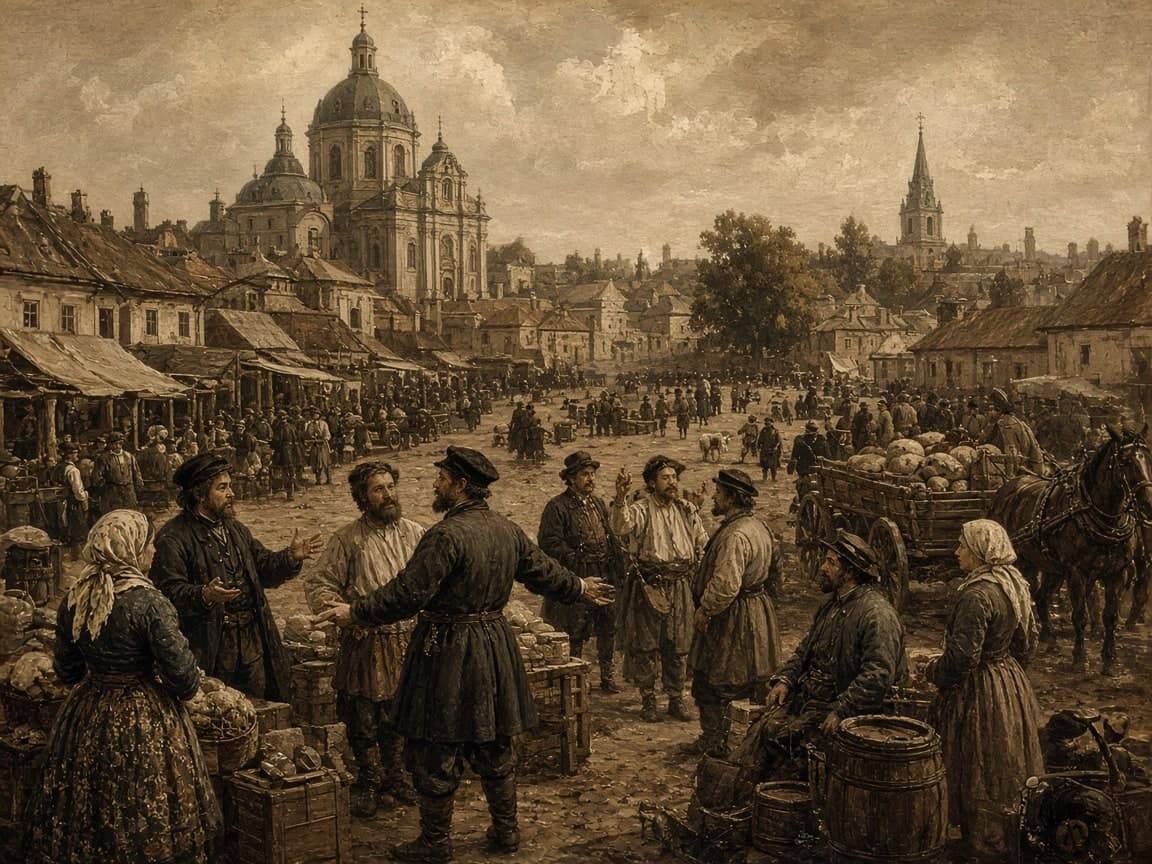
On the other side of Lopani, as now, there was a market abounding in a variety of foodstuffs. When hunger became unbearable, the boys gathered in a crowd near their educational institution. Then, accelerating on the descent, they ran across the masonry and, like a Tatar, flew into the market with a wild whoop. They rushed headlong through it, snatching as they went everything that came to hand: some had a trigger, some had eggs, some had a piece of lard. Seeing the approach of this horde, the traders raised a desperate cry: “Save yourself, the rakli are running! Ruckles!..” - and sat on their goods, covering them with their skirts.
Subsequently, the nickname passed from students to thieves in general. So the innocent saint gave the name to the best part of our fellow countrymen. True, there is another version: the name comes from the name of the Kharkov nobleman of French origin de Raclos, who wastrustee of this educational institution. The author of these notes does not know which version is closer to the truth.
“Vanko” was the name given to horse-drawn carriers in our city, regardless of their name. The routes of the horse-drawn horse and then the tram were very limited in our city, and therefore we had to walk or ride a horse to get to a remote area or suburb. Cab drivers were on duty at parking lots in particularly crowded places (stations, markets) or drove around the streets looking for passengers. These people were very colorful. There is a known case when, on New Year’s Eve, two “Vankas” decided to christen their horses. They took vodka, sausage, and rolls and, calling themselves godfathers, drank heavily. Because of their restive nature, the horses were named after the hated imperialists: Mussolini and Chamberlain.
By the way, horse-drawn carriages continued in the city long after the Great Patriotic War. Residents of Podol loved to watch such a picture. To the wineAt the same time, a cart pulled by a horse with a straw hat on its head drove up to a shop on Rybnaya Street. The blue-nosed driver entered the store, knocked over a glass of port, and carried the second one out to his horse. The mare drank and only after that agreed
move on.
Old-timers in our city still call tram routes “brands” and not the generally accepted “numbers”. An object for hanging clothes - not with hangers, but with a trempel (after the name of the entrepreneur - the owner of the factory that produced these simple devices). And more from Kharkov vocabulary...
“Blagbaz” is the market described above in the Zalopanskaya part of the city, which got its name from the nearby Annunciation Church.
“Saburka” (aka “Saburova Dacha”, “Thirty-sixth”, “Fifteenth”) - as they called the Kharkov clinical hospital, the second in Russia after St. Petersburg: by decreeCatherine the Second, at the very end of the eighteenth century, a strait house was built in Kharkov, which was soon taken out of the city - to the estate of the former governor Saburov.
The Kharkov vocabulary continued to expand in the twentieth century.
"Annushka" is a tram of brand "A". His route was
circular and covered the central part of the city. Neither "B"
neither “B”, nor “G”, nor other letters in the brands of our trams
were not used, except perhaps “U” - educational.
“Rakovsky” - this is how cigarettes were called in the twenties, in honor of the first chairman of the government of Soviet Ukraine, Kh. Rakovsky. It is unknown now whether this figure smoked or not, but at that time the Kharkov Tobacco Factory bore his name.
“Tinyakovka” is the largest clothing factory, clothing not only Kharkov residents, but also half of Ukraine with its products. Named after the revolutionary worker who worked at this enterprise.
“Podkova” is a residential building on Gprshmana Street,built in 1932 for the leading party, Soviet and managerial elite. It was named so because it looks like
arcs.
“Big grocery store” - this name refers to two grocery stores at once: No. 1 on Sumskaya and No. 2 on Pushkinskaya.
"Stometrovka" - a section of Sumskaya from Zerkalnaya Stream to the Theater named after. Shevchenko. The most popular place for flandering in the 60s of the twentieth century, at one time it was even closed to traffic.
“Machine Gun” was a popular eatery in those same years on the corner of Sumskaya and Sovnarkomovskaya, a place for dates, business and non-business meetings. It was called so because it was the first automatic cafe in the city.
“Zhuzhka” is a general name for fruit and berry wines (synonymous with “babble”, “gniluhi”, “ink”, etc.). Their production, mainly from rotten apples, was produced in incredible quantities by Ukrainian enterprises in the 60s and 70s. They were cheap, and therefore they were usedextremely popular among undemanding drinkers. They began to produce such wines in the Kharkov region. The bottles were decorated with a label depicting bees flying over flowers. Hence the name.
By the end of the twentieth century, all-Ukrainian neologisms were also in circulation in Kharkov.
“Kravchuchki” - Ukrainian money issued under President L. Kravchuk - “karbovanets”. Due to cosmic inflation, all residents of the country, including pensioners, turned into millionaires: pensions and salaries (and, accordingly, prices) were expressed in six-seven-digit numbers.
“Kuchmovoz” is a hand cart, an invariable attribute of a city dweller scouring the streets in search of where he can buy something cheaper. Or sell it. Or bring it from the garden plot. It is prohibited to enter the metro with this type of transport, allegedly because its wheels get stuck on the steps of the escalator.
This site is for all Kharkiv locals. Based on “Kharkiv in Tales and Anecdotes” (Folio, 2001).