Place-names · 1929 · Industrial district
THE LEADER'S LAST "WORD"
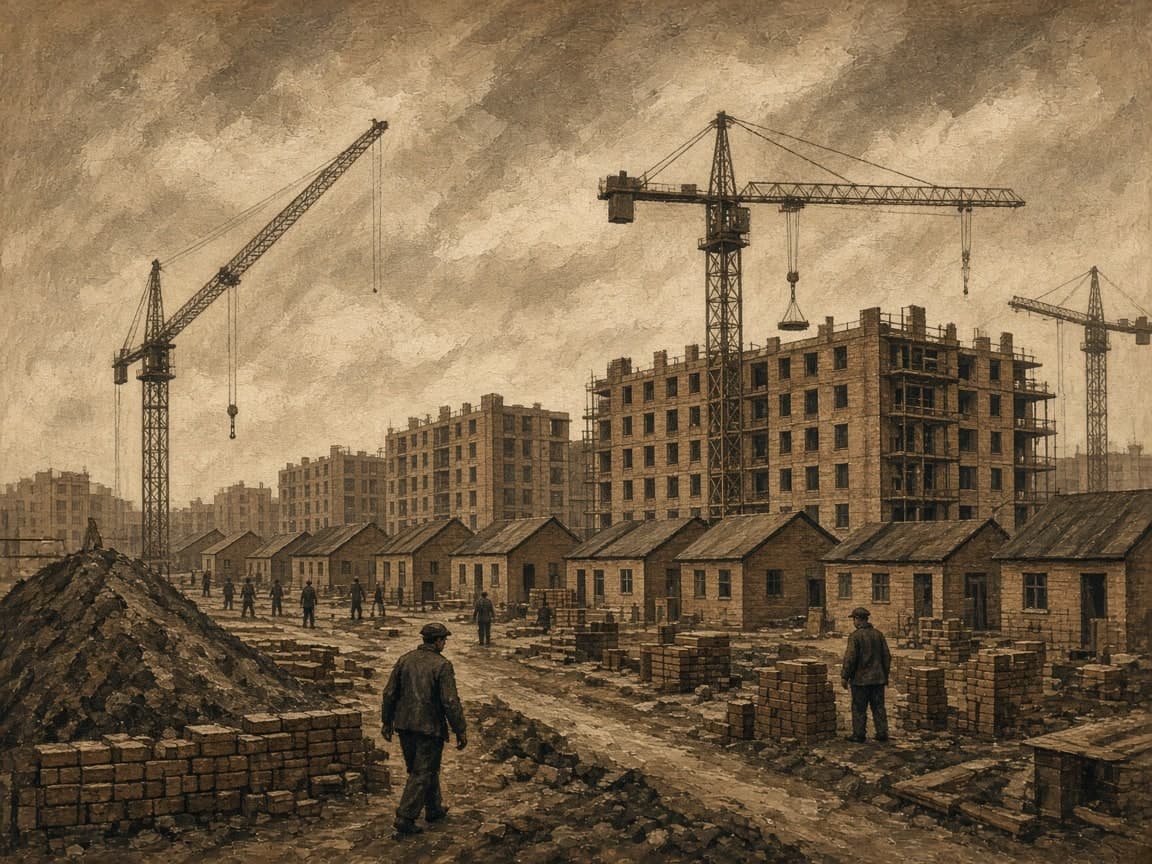
In the late 20s - 30s, powerful industrial and residential construction was carried out in Kharkov. Both workers and employees moved from shacks and communal apartments to comfortable houses. Writers also decided to get their own housing, most of whom settled in the then capital of Ukraine. For this purpose, they created a cooperative called “Slovo”. In addition to writers - such as M. Khvylevoy, M. Kulish, I. Mikitenko, V. Sosyura, it included artists - theater director L. Kurbas, artist A. Petritsky and many others.
Ostap Vishnya was elected chairman of the cooperative - as a person with enormous authority - for the purpose of obtaining scarce funds and materials (and then everything was in short supply). Due to their chronic shortage, a solid house on Barachnaya Street (later renamed Kultury Street) was built very slowly, and the writer, who turned into a business executive, thought about how to get them.
And thenFebruary 1929 rolled up - the decade of Ukrainian literature in Moscow. The ceremonial meeting took place at the Bolshoi Theater, Ostap Vishnya sat on the stage along with his Ukrainian and Russian colleagues. And suddenly there was an ovation, the hall rose - it was Stalin who appeared and sat down at the presidium table.
“What if I take this opportunity?” - flashed through the mind of the writer, and here he was preoccupied with economic problems. I wrote a note to the leader: they say that writers in the capital of Ukraine are vegetating without housing, do not have conditions for creativity, and such and such an amount is required to complete the construction of a house. Stalin immediately silently read the note and put it in his pocket.
In the evening, there was a knock on one of the hotel rooms where guests from Ukraine were staying. An armed man in the uniform of an OGPU officer entered.
— Are you Ostap Cherry? he asked.
“I...” he was confused.
- This is for you! — The messenger opened his briefcase and began to lay out packs from itmoney. Then, without taking a receipt, he saluted and left.
Not daring to leave such a sum in his room, Ostap Vishnya, instead of going to meetings and participating in other events in Moscow, was forced to sit near the money for the entire decade. After which he returned with everyone to Kharkov and handed them over to the bank.
The construction of the “Slovo” was completed in the same 1929.
This site is for all Kharkiv locals. Based on “Kharkiv in Tales and Anecdotes” (Folio, 2001).