Rumors · 1901 · Centre
UNDER A TRAIN
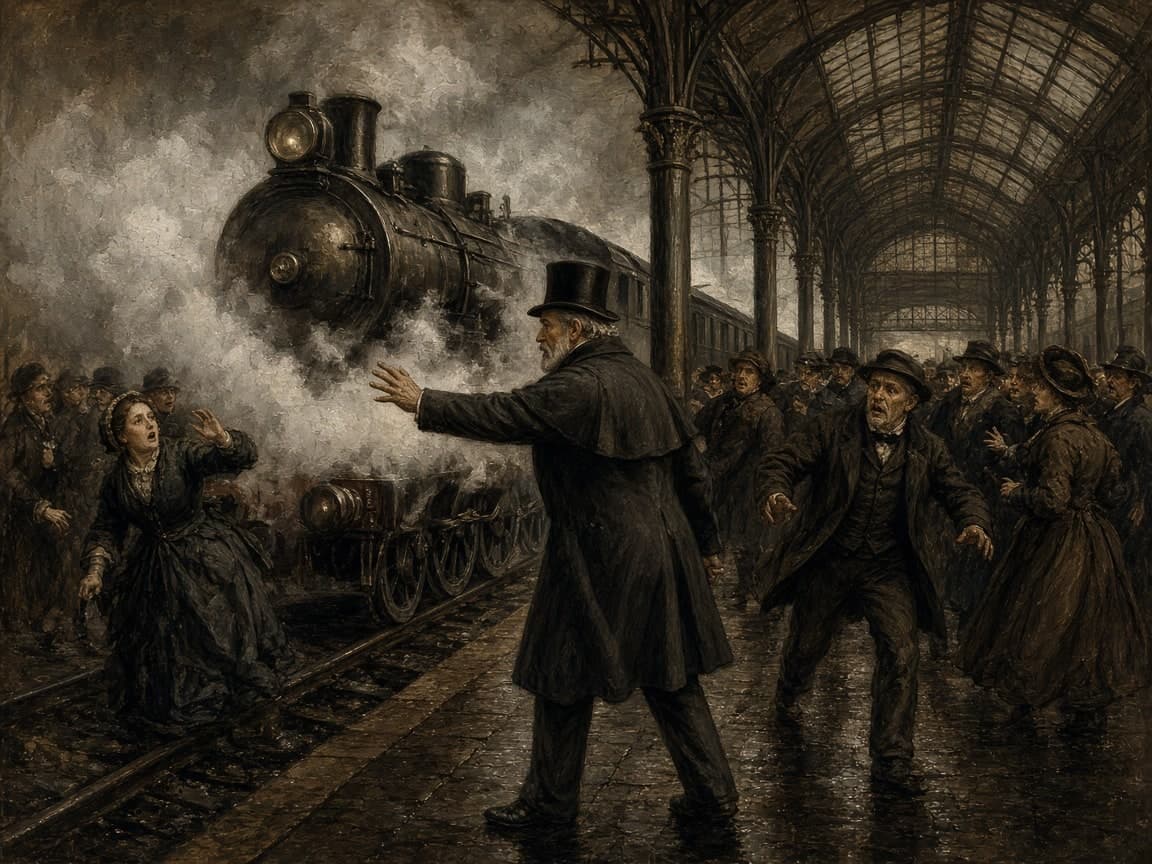
On the platform of the Warsaw Station in St. Petersburg stood a respectable elderly gentleman. When the train approached, he threw himself under the wheels. This incident, which became known throughout Russia, happened on May 7, 1901; the suicide was one of the largest financiers, the founder of the Land and Trade Credit Banks in Kharkov, Alexey Kirillovich Alchevsky.
Coming from a merchant family, he showed himself to be a flexible and proactive entrepreneur of a new type. In our city, he started his business with a simple tea shop, but within a year he established the Trade Bank, and three years later, the Land Bank. This bank was the first of its kind in Russia, as it issued loans against mortgages - mortgaging land. A. Alchevsky enjoyed such authority and trust that he was able to attract large capital. Suffice it to say that the Land Bank already in the first year of its existence issued a colossal amount in the form of loans - more than fourteenmillion rubles! Even the Minister of Finance consulted Alchevsky.
The Kharkov banker began to invest capital in the development of mining and metallurgy in Donbass, seeing the promise of this region (here his strongest competitor was the large industrialist Yuz). Being a patriot of his country, Alexey Kirillovich believed that, first of all, the government should encourage Russian capital, but he did not always find the support of St. Petersburg officials.
Alchevsky loved literature and art and patronized them. The world's first monument to T. Shevchenko was erected in his estate; at his order, A. Beketov built the most beautiful buildings of the Land and Trade Banks (the first now houses a motor transport technical school, and the second - the House of Technology).
At the very end of the nineteenth century, signs of an industrial crisis appeared. Alchevsky also foresaw a threat to his business in him. Belgianindustrialists offered to buy part of his shares for twenty million rubles, but he did not want to sell them to foreigners. Alexey Kirillovich went to St. Petersburg and asked Finance Minister Witte for a government order for metal, which could save him, especially since it was planned anyway. The minister did not cooperate and advised the Kharkov resident to get out on his own. However, Alchevsky did not see such an opportunity and, as a result, wandering around the capital, made a tragic decision. Before his death, he wrote: “How terribly I am ending! Forgive me, forgive me everyone!.. How many people have I killed, not excluding my own children!.. Such is fate!”
The shares of the Land Bank fell sharply in price, and they were bought up by the largest Russian industrialists and bankers, the Ryabushinsky brothers. They launched a high-profile investigation into the alleged financial abuses of the former owner, which was covered by Russia's largest newspapers. At the endIn the end, Witte presented a report to Nicholas II, in which he admitted the rashness and thoughtlessness of his orders regarding the Kharkov banks, and the deviations in their activities from the charter “are the result of a common misfortune: the financial and industrial crisis.”
Having gone bankrupt, the Alchevskys had to part with their estate in Mironositsky Lane (now Sovnarkomovskaya Street), which occupied an entire block.
The Alchevsky family left a significant mark on the history of our city. Alexei Kirillovich's wife Khristya Danilovna was an outstanding figure of education, she was highly valued by L. Tolstoy, F. Dostoevsky, I. Turgenev, G. Uspensky. Son Gregory is a composer and music teacher. Son Nikolai is the creator of the first Ukrainian primer of the Soviet era. Son Ivan is a famous singer who has performed on the stages of the world's largest opera houses. The daughter of Christ is a poetess. Her husband A. Beketov is an outstanding architect.
People in this story
Places in this story
This site is for all Kharkiv locals. Based on “Kharkiv in Tales and Anecdotes” (Folio, 2001).