Legends · Centre
MEEKNESS AND MIGHT
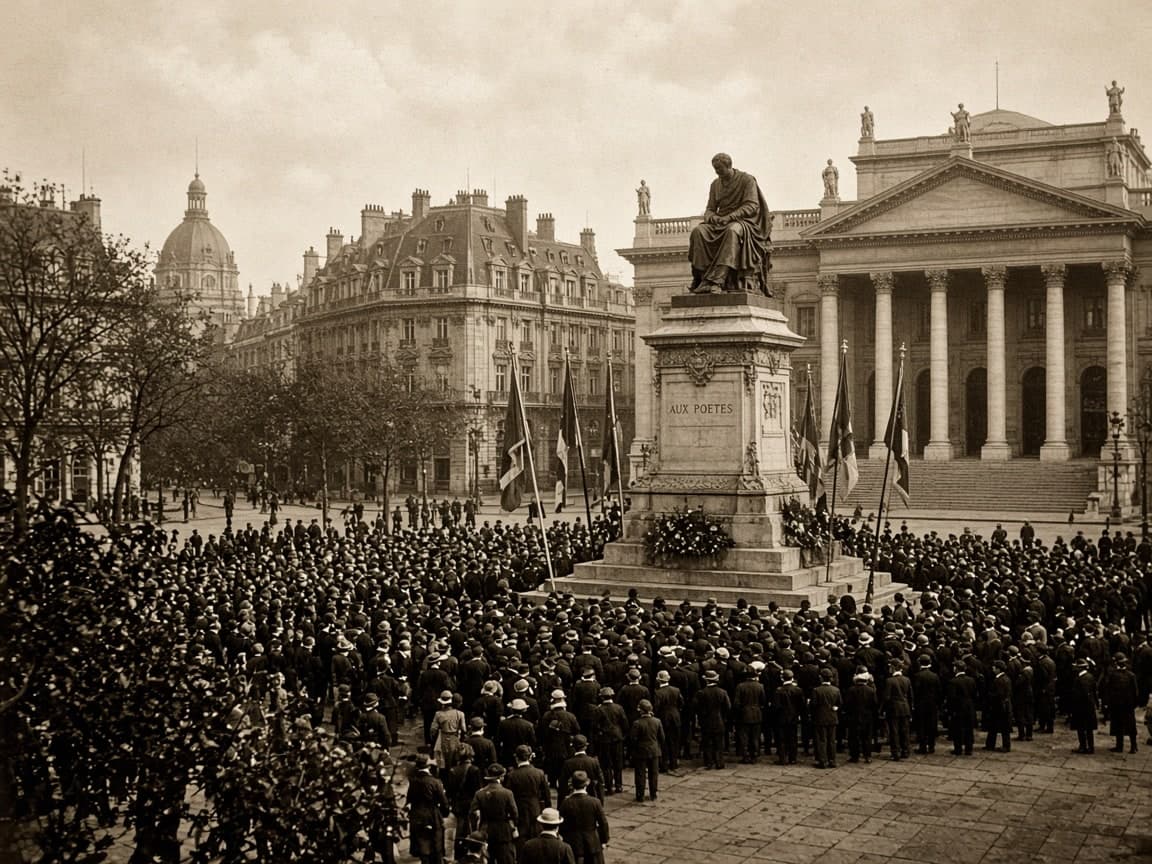
“During the election campaign, I spoke in Kharkov near the monument to Pushkin. People flooded the square
and in the eyes there was an expectation of something important that should happen in the country, with us, together. They whispered in my ear: “Chichibabin is here...” I looked around and saw this man in the crowd, squeezed on all sides, tall, thin, looking either like an icon painter of Rublev’s times, or like one of those artisans who almost emerged in Rus'. From under thick eyebrows, the eyes of a guslar, a knight, a monk, girded, however, with a sword, blazed blue, protected from all poisonous smoke. Chichibabin said this about the bell: “It contains meekness and power.” It is these two bell-like qualities, fused into one, that constitute accidental self-determination. I asked Chichi-babin to read the poems, and while the Kharkovites applauded, rejoicing at his appearance, he awkwardly pulled himself out of the crowd and walked along the only free place - the edge of the flowerbed nearmonument, trying not to damage the flowers, stumbling in the rich black soil, holding a shopping bag in his hands, which showed that he had no intention of performing at all. But, you know, with this wallet, and with this awkward and shy gait, he was completely natural around Pushkin... He gradually developed into one of the greatest modern poets. It’s not just about such masterpieces as “Eat Red Tomatoes Without Me” or “Take Off My Fatigue, Mother Death.” Without these poems, no real anthology of Russian poetry is now possible. It's also about fate united with a gift. I understand fate not only by the facts of Chichi-babin’s personal tragedies: he was imprisoned and expelled from the Writers’ Union for his defense of Tvardovsky, and lived for a long time in obscurity and semi-poverty. The main component of fate, much more than the most tragic circumstances, is character. The great thing aboutChichibabine is his character. The character is very Russian, very Slavic, precisely because of the sensitivity to the pains and troubles of not only Russians, but also all other peoples. In the words of Dostoevsky - “worldwide response.” This is one of those qualities that makes Chichibabin look so natural next to the Pushkin monument. What insight into the pain of other peoples strikes Chichi-Babin’s poems about Jews or Tatars. Chichi-babin's devotion to poetry is inseparable from devotion
conscience as a moral homeland. If morality were taught according to the poems of Chichi-Babin, then the violation of freedom and mockery of people would be impossible. What a contrast with our moral and didactic literature, which placed official decrees and resolutions above all else! The resolutions to which Chichibabin is subject are written in the Bible, written by Grigory Skovoroda, Tolstoy, Pasternak.
If, like all of us, not all poemsChichi-babin is ideal, then for me, nevertheless, with his whole life, demeanor, poetry, he is the embodiment of the ideal of a poetic character. Meekness is in enduring suffering. Power lies in overcoming them. Meekness is in manners. Power is in actions, actions and words” (E. Yevtushenko).
People in this story
This site is for all Kharkiv locals. Based on “Kharkiv in Tales and Anecdotes” (Folio, 2001).