Anecdotes · 1988 · Centre
KOROTICH, GIVE THEM HELL!
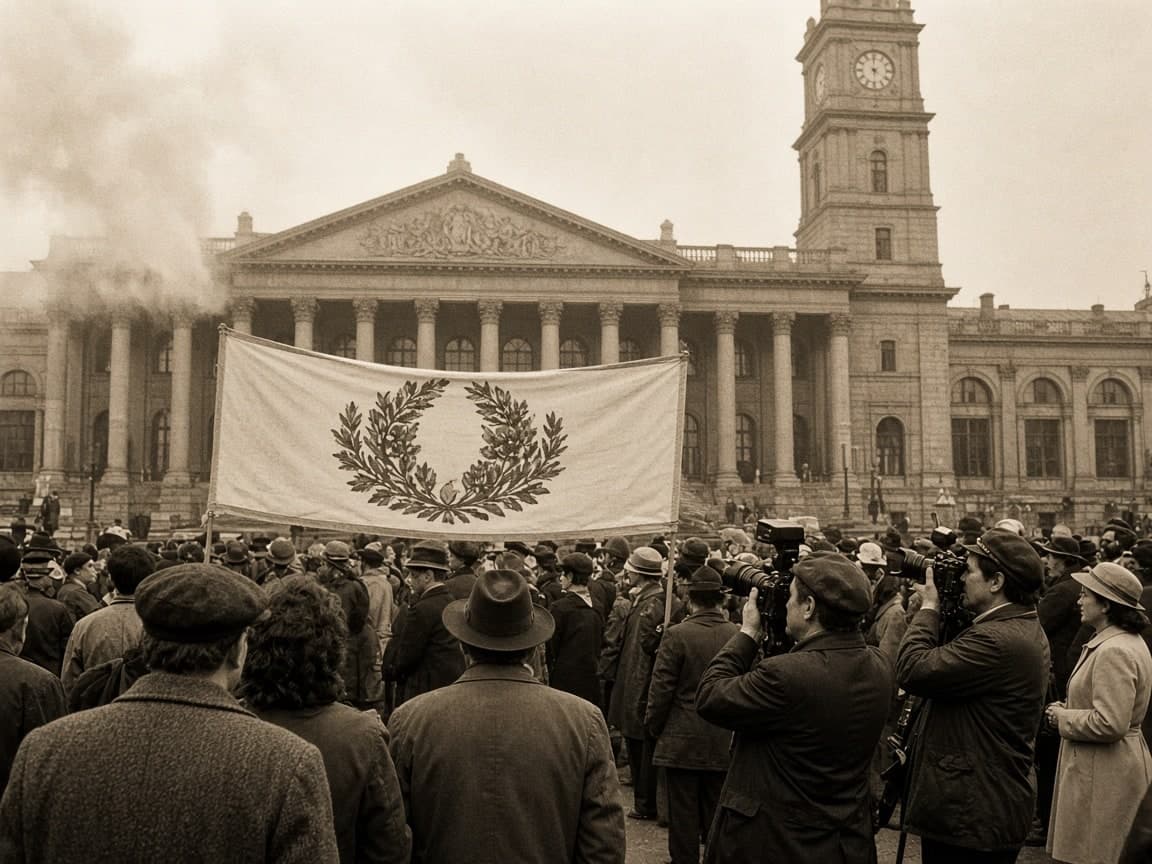
In March 1988, such a banner greeted Vitaly Korotich, editor-in-chief of the Ogonyok magazine, who arrived in our city at the South Station. At that time it was the most cutting-edge, if not the only, periodical in the country that dared to mercilessly destroy the rotten system. Everyone read it both here and all over the world - the magazine's circulation reached four and a half million copies! V. Korotich was proclaimed International Editor of the Year abroad (neither before nor after have domestic journalists been awarded such a title). The following joke was circulating about him at that time:
“In the near future there is a concentration camp roll call. They call: “Gorbachev?” - "Here!" - “Yakovlev?” - "I!" - “Yeltsin?” - "Here!" So the roll call continues a little more, and then: “Korotich?” Silence. - “Korotich?” Silence again. - “Korotich?” - “Yes, here I am!” - “You should have been silent before, Korotich!..”
“In Kharkov they remembered me not only for“Ogonyok”, but also according to previous Kyiv books, radio and television programs. This was, perhaps, exactly the Ukraine that I loved from the bottom of my heart and with which we always understood each other: bright, not fussing around in ostentatious folklore amusements, thinking on a modern level. My parents once studied in Kharkov, and this became another argument in favor of choosing. I agreed to run in this smart city of one and a half million, the third center of the Soviet Union in terms of scientific and technical potential,” the writer later recalled about those days.
Eleven more candidates registered for the same deputy seat in the Supreme Soviet of the USSR (these were the first truly free elections), one of whom was the mayor of Kharkov, Sokolovsky. Naturally, the entire party, state and law enforcement system worked for him. In an effort to prevent the nominee of the democratic forces, she repaired to himall sorts of obstacles: stopped the movement of transport to the venues of rallies, ink in the press, gave direct instructions to party members, police and military personnel to vote against. They even offered a bribe to get him to withdraw his candidacy.
Famous people came from Moscow to support Korotich, including Yuri Nikulin, who urged Kharkov residents to vote for their like-minded person. At the same time, a landing party from the “Memory” society arrived from the then capital, and began to expose the writer as an agent of the “Judeo-Masons.” However, having received a friendly rebuff from the townspeople, he was forced to go home. The stronger those who were “against” acted, the more powerful those who were “for” became active. On the eve of the elections, they created a control system to prevent falsification. Despite
to the fierce opposition of the authorities (or thanks to it), Korotich received less than eighty percent in almost no areavotes.
“There was a certain mystical detail in my deputy. The national-territorial district from which I was elected to the Supreme Council in Kharkov was called “District 58”. The entire older generation of Russian freethinkers knew these figures by heart: millions of people were once imprisoned under Article 58 (anti-Soviet propaganda and agitation).
For me, this was already the number on the deputy badge and on the certificate. Almost none of my peers remembered the number of the damned article on a daily basis and did not react in any way to the strange number of my district. Only the old special officer who issued parliamentary documents checked the numbers on the ID and on the back of the flag and said: “Wow, that’s just the number for you...” What did he mean?” (V. Korotich)
People in this story
Places in this story
This site is for all Kharkiv locals. Based on “Kharkiv in Tales and Anecdotes” (Folio, 2001).