Tales · 1928–1942 · Centre
TOWARD "TWO FIGHTERS"
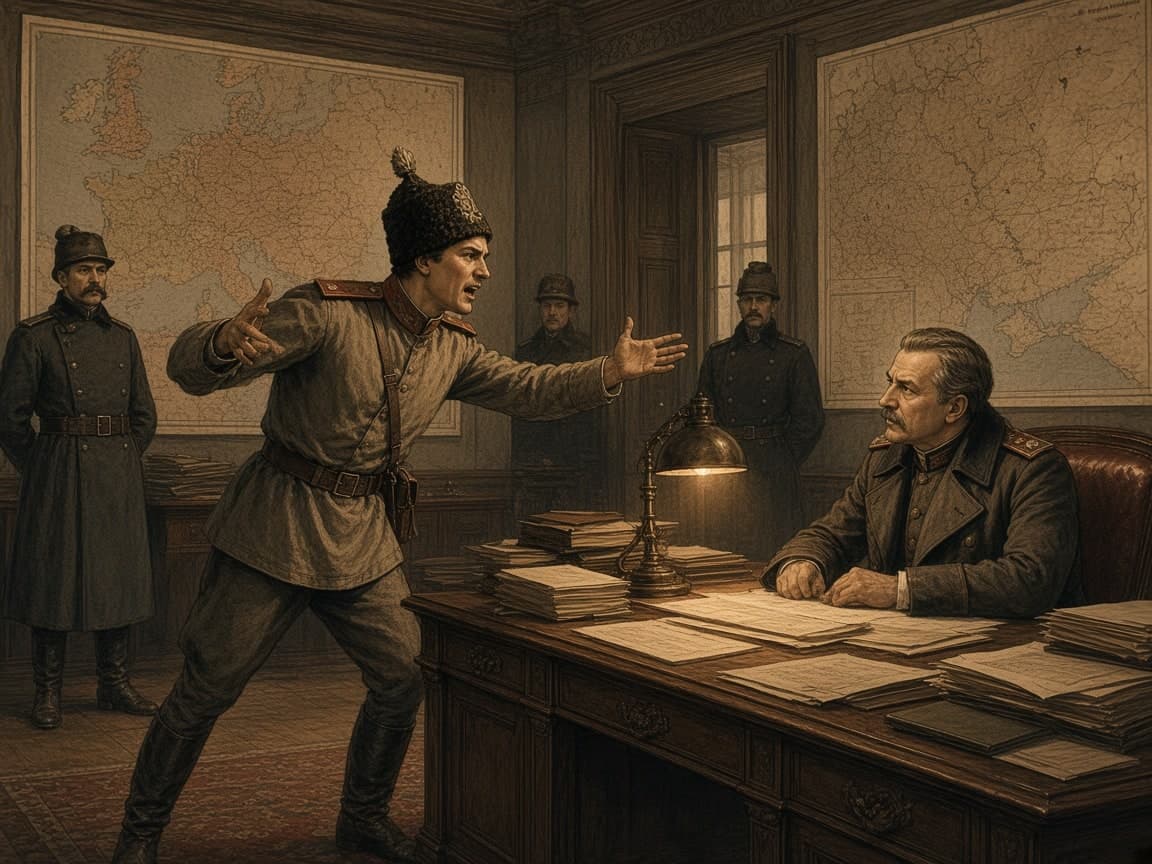
An energetic young man entered the office of Army Commander V.K. Blucher, who was quartered in Kharkov at that time. He asked to put a military unit at his disposal along with military equipment. The commander decided that he was not mentally well, but it turned out that he was a filmmaker and he needed the army to film a film about the civil war.
The visitor was the head of Kinorabmol, Leonid Lukov. He himself created this association, attracting his peers into it, who were passionate about the then new art
screen. In the meantime, he studied at the evening workers' school and collaborated with the press. The object of both the creative and organizational activities of Kinorabmol was young people. On his initiative, the country’s first Komsomol cinema was opened in Kharkov (that’s who the hall on Sumskaya owes its name to).
L. Lukov wrote the script “Vanka and the Avenger” - about how a shepherd boy and his shepherd became red scouts incamp of the White Guards. It was made into a film, the first one released by the Kyiv Film Factory in 1928. At the Odessa Film Studio they filmed the three-part feature film “Scum”, in the credits of which for the first time the following appeared: “Produced by the Kinorabmol collective (Kharkov).” Enthusiasts acquired a “Pate” film camera and other equipment, premises, and film. They began to edit film collections and film themselves. They dreamed of organizing a professional film studio in Kharkov, but they failed. The group was transferred to Kiev.
At the Kyiv Film Studio, L. Lukov made films that placed him among the masters of Soviet cinema: “I Love,” “Big Life,” “Alexander Parkhomenko.” The pinnacle of his creativity was the film “Two Fighters,” created in 1942 at the Tashkent Film Studio. The embodiment of sensitivity, nobility, self-sacrifice in the relationship between fellow machine gunners, joker-Odessa resident Arkady Dzyubin (Mark Bernes) andthe reserved, laconic Uralian Sasha from Uralmash (Boris Andreev) filled her with warmth, so necessary for people during the harsh years of the war. The songs “Dark Night” and “Scows Full of Mullet” written by N. Bogoslovsky immediately became loved by the people.
After the war, our fellow countryman was awarded the Order of Lenin and appointed artistic director of the Soyuzdetfilm film studio in Moscow (later the Gorky Studio). There he created many more films and was twice awarded the Stalin Prize.
Places in this story
This site is for all Kharkiv locals. Based on “Kharkiv in Tales and Anecdotes” (Folio, 2001).