Tales · Centre
FROM MUD TO PRINCE
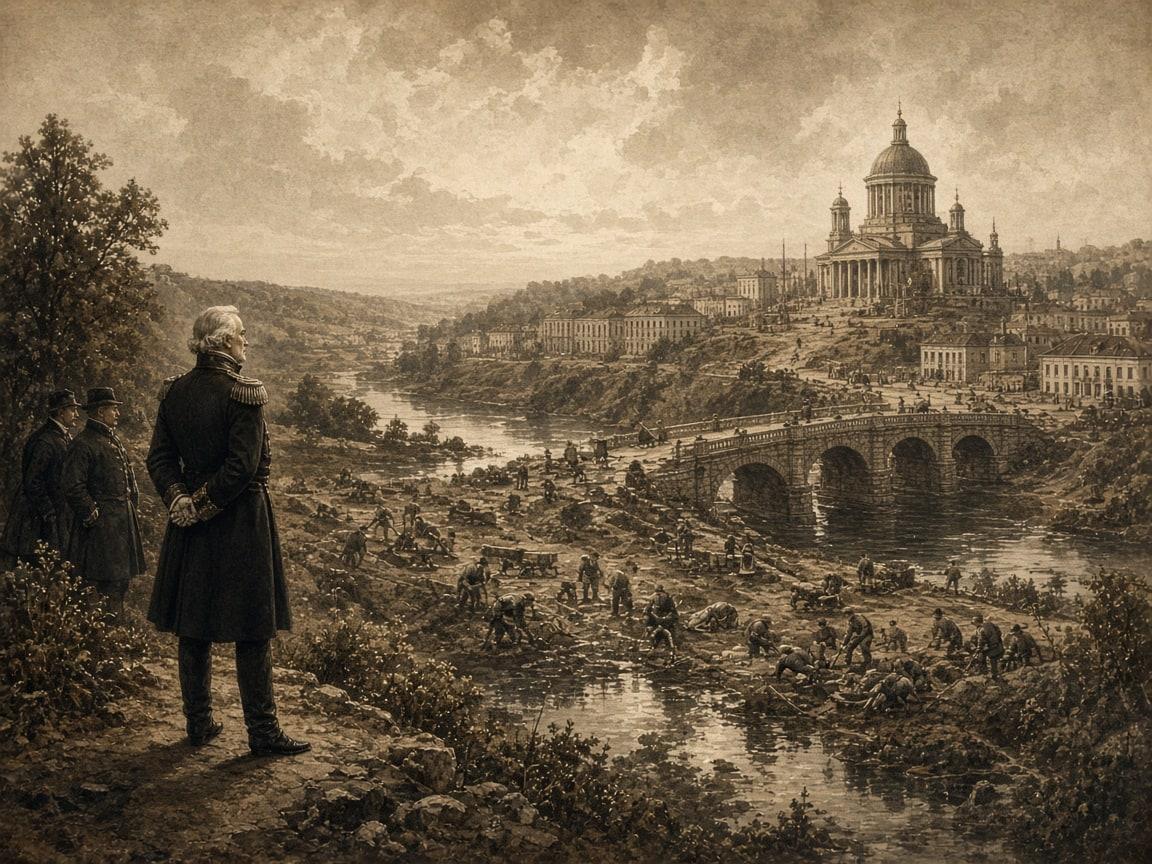
One of the prominent Kharkov governors was “D. Pashkov. Under him, the city was actively improved: swamps were eaten up, bridges and crossings were built, ditches were dug to drain water, stone churches were erected,
houses and shops. In Kharkov, the governor owned a vast territory in the very center of the city from the University Hill to Lopan. Pashkov was a handsome man and took care of his appearance, for which he ordered everything that appeared there from Paris, the best in cosmetics, and he dressed very elegantly.
At the same time, the governor’s siblings were simple peasants, but he obtained the nobility for them. Now it was necessary to bring them into the appropriate form. Here's how a contemporary talked about it:
“It’s hard to believe that these were the governor’s brothers. Old men with long gray beards, hair in a bracket with a parting in the middle, in long retinues, belted with redsashes and greased boots. By order of the governor, they were not immediately allowed to see him, but first had their hair cut, their beards shaved, washed in a bathhouse and dressed. When they had to part with their beards, they began to pray and weep. Meanwhile, more than a dozen different artisans hastily sewed a complete suit for each of them - long frock coats made of fine English cloth, velvet doublets, Dutch shirts with cuffs and German boots with tassels.
Two days later the old men were decently dressed and began to parade, like a recruit, i.e. completing the course of education necessary for a nobleman, and even a governor’s brother. There were no French in Kharkov yet, but the Germans were already present and supplied the whole of Kharkov with sausages and beer, sewed boots, made and sold blacking wax and various trinkets, with which they later bought the best estates in the vicinity of Kharkov and in the province, and builttheir own houses, took into their own hands local trade, all foreign correspondence, the education of Russian youth, etc.
Two of these Germans, Herr Heidemann and another, Köppen, were hired to straighten out the Pashkovs. Wanting to show themselves worthy of such an important calling, the Germans began to drill the old people so much that they were not happy with the nobility, they wanted to run away and almost left Kharkov on foot to their Lobach. Apparently, the Germans gave them a good drill. The Germans put old men in a line, straightened their arms and legs and taught them to walk like a nobleman, without bending their knees; then they taught how to sit down, sit and stand up, bow, hold your head and hands, how to sit at dinner and how much to take food, how to drink tea, speak and pray like a nobleman. It was painful for the old men to transform from peasants into nobles, but the power of their brother-governor was strong, to which they had to submit according to
necessary.I.D. Pashkov ordered to tell the brothers that he did not at all want to see them as peasants, but as nobles, and therefore the education of the old men lasted for two whole weeks, until finally a day was appointed for presentation to their brother. And the old people rejoiced and died. Only the Right Reverend and Karpov were with the governor when in the morning four brothers of Guards stature, transformed into Russian Germans, entered the hall. These Homeric elders entered with fear and trembling, the eldest of whom was already eighty years old, and the other over sixty years old. They entered, rushed to their brother, fell on their knees in front of him and kissed his hands and feet. I.D. He was so touched and shocked that for half an hour he could not utter a single word, but only cried and took his brothers into his arms. The scene was deeply astonishing.
Then I.D. pointed out to the brothers the royal letter, unfolded and lying in full size on the table under the icons, before which the old men fell down,They prayed, kissed and cried. I.D. congratulated the brothers as nobles. The gathering of guests began, snacks and lunch with music and singers. The very next day I.D. generously presented the brothers: each received a good wolf fur coat and a sable hat with warm fur boots, because it was already October, several arshins of cloth, a piece of fine linen and half a dozen silver spoons. I didn’t forget I.D. and three daughters-in-law: he ordered the brothers to take each a piece of calico and an expensive shawl. During the daily congress and dinners, the brothers stayed for another week with the governor, visited the bishop, churches, public places and some of the famous honorary persons, and traveled and walked throughout the city, and they were shown everything that was remarkable at that time in Kharkov. Thus, having arrived in Kharkov as peasants and having stayed there for three weeks, the great-grandfathers left in chaises given to them by Karpov and other merchants, nobles, i.e.such “gentlemen” as they could never even dream of.
However, the situation of these “gentlemen” in the village turned out to be quite deplorable: despite the nobility and gifts from their brother, they returned to their former peasant life. And their wives, who had not gone through the same school of education that their husbands had undergone under the guidance of German teachers, could not properly appreciate their new noble title. Two of them, seeing their husbands without beards and in German dress, were frightened and began to scream, and the third, a lively and cheerful old woman, began to laugh and mock her husband, and made him so angry that he beat her and left home for a week. The men, who had even gathered from neighboring villages to look at the new nobles, decided that the old men must have been dishonored for some offense, for they shaved their beards and cut their hair like a recruit. This is how the village, ignorant of noble customs, interpreted it in a peculiar way.the metamorphosis that occurred with the governor’s brothers in Kharkov” (D. Bagalei).
Places in this story
This site is for all Kharkiv locals. Based on “Kharkiv in Tales and Anecdotes” (Folio, 2001).