Tales · 1837–1844 · Pavlove Pole
CITIZENS IN HONOR
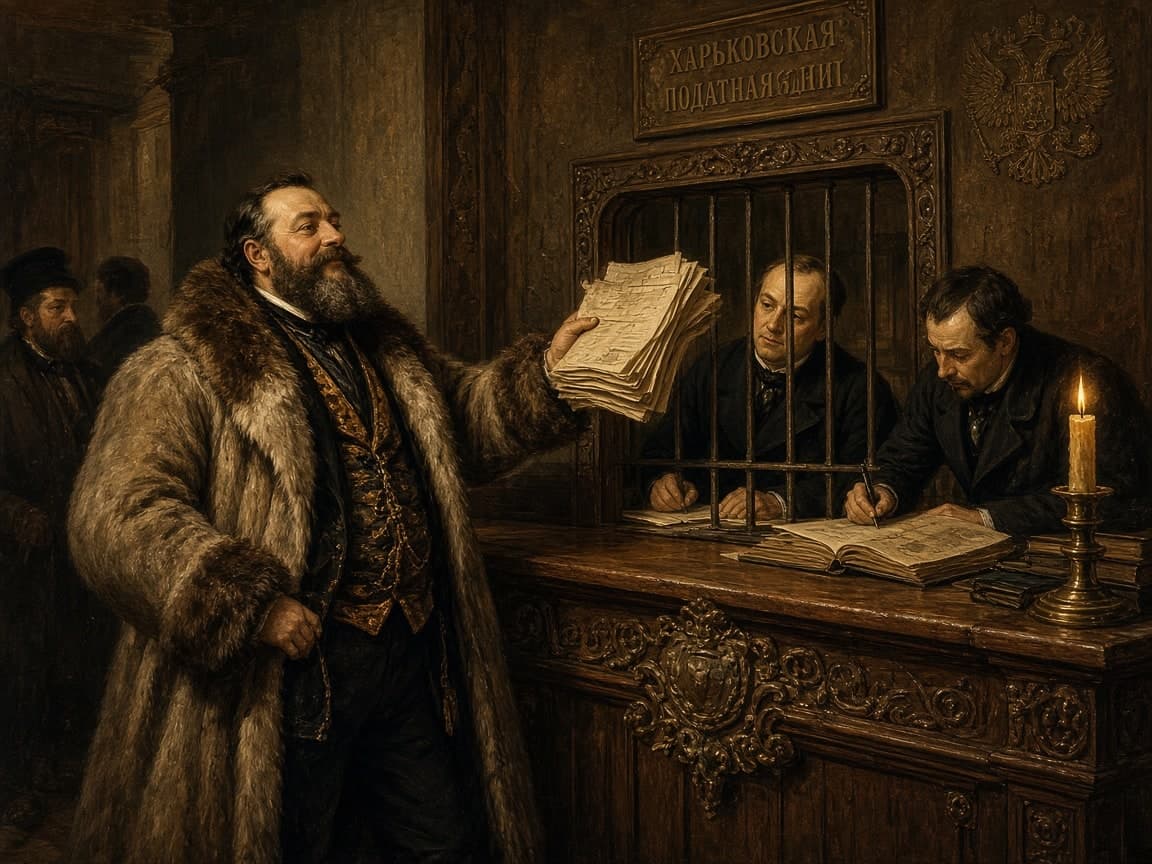
Imagine, a merchant submits a certificate of his income to the tax office, and he does not underestimate it, as one would expect, but, on the contrary, overstates it. For what? What's the point? By displaying his wealth, a merchant could qualify for a higher guild, which ensured a higher position in society. Particularly attractive was the first one, which gave the right to receive the title of honorary citizen of the city.
The government introduced the law on honorary citizenship in the thirties of the nineteenth century - with the aim of morally stimulating business people who did not belong to the nobility. According to this law, a merchant who had been a member of the first guild for ten years or twenty years in the second could become an honorary citizen. This should have been prompted not only by ambition, but also by guaranteed legal status. The merchant enjoyed the benefits of the merchant title only as long as he paid guild fees. Becomingan honorary citizen, he not only rose in social position, but also received strong confidence that no vicissitudes of fortune would no longer threaten to overthrow him into a powerless “meanness.” Therefore, merchants sought to inflate their financial status, although this introduced them into unnecessary expenses. In Nikolaev times, only a few of the richest and most influential people in the city had the title of honorary citizen. Since 1844, officials and university teachers also received this right, and with the reforms of the Alexander period, this circle became even wider.
The first honorary citizens appeared in Kharkov in 1837 - there were four of them. Every year their number increased and by the end of the nineteenth century reached almost four thousand. Of the persons whose names appear on these pages, they were Karpov, Pavlov, Ryzhov, Kostyurin, Lomakin, Kuzin, Bagalei.
Awarding honorary titlescitizenship continued in Soviet times, and it was received, of course, no longer by financial bigwigs, but by Soviet, party and industrial leaders, starting with Artyom.
This site is for all Kharkiv locals. Based on “Kharkiv in Tales and Anecdotes” (Folio, 2001).